There are just so many open-world games out there, and so many of them are really, really good. Every year, it feels like there’s at least one — and sometimes two or three — must-play open-world games hitting shelves, adding a massive world to explore that’s loaded with side quests to everyone’s backlog. However, not every game can be a hit. Sometimes, an open-world game launches to mixed reviews or in a poor technical state and gets labeled “mid” by critics and players alike.

Best Co-Op Open-World Games
Here are a variety of options for the best co-op games that can be experienced in an open world setting.
That label can be misleading, though. Take the following open-world games as examples. At launch, they were all overlooked for a variety of reasons. Poor performance, bad reviews, or a failure to market themselves accurately are all culprits here, and players brushed these games off, turning their eyes to the next big hit. However, once people actually played them, they realized what they were missing out on. That’s why, for the most part, these games have all achieved cult classic status. Those that haven’t: well, maybe not enough people have tried them out yet.
Deadly Premonition
It’s Not Exactly Scary, But It’s Undeniably Unique
Deadly Premonition is a weird game. It presents itself as a horror game, and it is, but not in the traditional sense. It’s situated more in the realm of surreal and campy than in the realm of genuinely frightening. It’s got a little bit of Twin Peaks’ DNA in its small-town strangeness, but overall, it’s just kind of goofy. The protagonist, Francis York Morgan, has become infamous for his hilarious dialogue, like when he calls a turkey, strawberry jam, and cereal sandwich “self-inflicted punishment.”
As a result, a lot of people played it and felt like it wasn’t a game that lived up to what it purports to be. There were also significant technical issues at launch, including wonky controls, frame rate drops, crashes, and exhausting load times, but those were (mostly) ironed out over time. However, when played on its own terms, Deadly Premonition is exactly what it tries to be, and it’s fantastic in that context. It’s not your typical horror game by any stretch, but that’s not a bad thing. Instead, it stands alone in its own niche, and there’s absolutely nothing else like it.
Days Gone
Surprisingly Heartfelt For How Macho It Is
There are a lot of zombie games out there, and a lot of them are open-world zombie games, which means any new entry in the genre needs to do something unique to stand out. Days Gone kind of did that in its marketing, focusing on its trademark horde mechanic, where massive waves of anywhere from 25 to 500 fully-simulated “freakers” will attack without notice if you explore the wrong abandoned building. However, it was criticized at launch for an overly-macho story, lackluster shooting, and (once again) a slew of technical issues.
Once the bugs were cleaned up, players got their hands on a more complete product and realized that a lot of those criticisms were very superficial. The shooting isn’t revolutionary, but it also isn’t boring. The bike mechanics, particularly the visual and operational upgrades, are deeply satisfying. And sure, the story is pretty macho — to start, maybe even excessively so — but stick with it and Days Gone slowly reveals a beating heart that is surprisingly emotional, even to the point of criticizing its own early-game machismo.
No Man’s Sky
Even In The Early Days, There Was Nothing Like It
There were some launch issues with No Man’s Sky as well, but these weren’t technical problems (although there was a bit of that, too). Instead, this game suffered from the virtually unattainable promises made by Hello Games during its promotional cycle. A seamless, fully-explorable universe loaded with planets, alien creatures, and ancient mysteries. An interconnected online world, even if the game was so big that you’d probably never see another player. Giant sand worms, spaceship battles, politics; all of it was promised. At launch, while the game was indeed a fully-randomized universe, many of those other promised features were nowhere to be found, and there just wasn’t a lot to do.
There are a couple of reasons why the narrative around No Man’s Sky has changed. For one, Hello Games has released (as of this writing) a whopping 27 major updates for the game, all of them adding new content —some of it what was previously promised, some of it completely new — and all of them free for every player. The other reason is that, once the sky-high expectations died down, the second wave of players to jump in realized that, even though it was light on activities, the experience of exploring in No Man’s Sky is second to none. As a deep, all-encompassing sci-fi experience, it took a while to get there, but as a low-stakes space exploration sim, it was best in class, and it still is today.
Cyberpunk 2077
Bugs And Crashes Didn’t Affect The Fantastic Writing
More than any game on the list, the technical issues seen at launch in Cyberpunk 2077 were disastrous. Crashes, bugs, and texture issues were just the tip of the iceberg. The game was unplayable on last-gen consoles, to the point that Sony delisted it from the PlayStation Store and offered refunds for anyone who purchased the PS4 version. It was bad, and it might have done in CD Projekt Red as a developer had they not pulled off a No Man’s Sky-esque resurgence. However, criticism of those technical issues was so intense that it mutated into criticism of the game as a whole.

5 Years Ago, CD Projekt Red Fumbled the Bag and One of Gaming’s Greatest Comeback Stories Got Underway
It’s been five years since CD Projekt Red made history with the disastrous launch of Cyberpunk 2077, followed by the biggest comeback of all time.
Regardless of what technical state it’s in, Cyberpunk 2077‘s narrative is spectacular. It’s easily the best first-person RPG storytelling ever seen in a game, even if that elevates it above some all-time greats like Fallout: New Vegas. Those with a PS5 in late 2020 or a PC that could run it knew, bugs aside, that Cyberpunk 2077 was something special. Now that the updates have rolled out and polished the game to an acceptable state, the rest of the gaming community is coming to that same realization. Cyberpunk 2077 was never a bad game; it was just a broken one.
Mad Max
How Does Any Game Compete With Metal Gear Solid?

Mad Max

7/10
- Released
-
September 1, 2015

There’s something particularly cruel about a great game that releases at a bad time and goes unnoticed as a result. That’s exactly what happened to Mad Max. It’s set in the film universe of the same name and follows its titular character, Max, on an adventure through the post-apocalyptic desert. It features a vehicle-upgrading mechanic similar to the system in Days Gone (albeit with a dieselpunk spin), Arkham-style freeflow combat, and a reactive open world with sandstorms, enemy encampments, and roving convoys. It’s another game that does exactly what it sets out to do, and stands out because of it.
The major issue was that Mad Max was released on September 1st, 2015, which coincided with another little open-world game release: Metal Gear Solid 5: The Phantom Pain. No matter how positive the conversation around Mad Max was, it was drowned out by the anticipation for the first Metal Gear Solid release in seven years, and the final game of Hideo Kojima’s tenure at Konami. Is Mad Max a better game than The Phantom Pain? No, but that’s an impossibly high standard to set. It’s still a great open-world game, and one that’s absolutely worth revisiting now that it’s not competing with one of the biggest releases of the decade.
Outward
Just Because It’s Unforgiving Doesn’t Mean It Isn’t Great
Outward will not hold your hand. Yes, on the surface, it’s an action RPG like any other, but beneath that layer is a sanity-testing survival game with temperature, hunger, and illness management systems, dynamic quest outcomes, and a brutal autosave that keeps you from undoing any of your mistakes. Even dying is merciless. You might respawn in a friendly town after being rescued by an NPC, or you might respawn in jail and have to find your way out. Want to play a magic-user? Get ready to work. Spells are exceptionally hard to find or buy, and even combat skills must be purchased for exorbitant prices or earned by completing quests. Even that is unforgiving, as quests have a variety of outcomes, not all of them good, and they can reshape the entire world depending on the result you achieve.
All of these features (maybe unsurprisingly) turned off a lot of players. It’s not just that the game is too hard; it offers no help in overcoming the obstacles it presents. All of these systems, complex as they are, need to be learned through trial and error, and some players simply don’t have the time or patience for it. Those who do, however, are in for a treat. Conquering the complex, difficult, and obtuse beast that is Outward is a singularly satisfying experience in the action RPG space. It’s especially great when playing co-op with a friend, which makes cracking the code on all of its intricacies a team effort that eases some of the frustration.
Homefront: The Revolution
It’s Not Medal Of Honor; It’s Something New
There aren’t many open-world first-person shooters out there. Ok, besides Far Cry. Typically, FPS games stick to linear campaigns to control the nature of their shootouts, providing more predictable entry points, cover placement, enemy positions, and weapon/ammo drops. It’s a system that has served the genre well for decades, but some games prove that a shakeup can be just as effective. One such game is Homefront: The Revolution.

Hardest Open-World FPS Games That Will Break You
Challenge both your aim and your mental fortitude in these exceptionally difficult open-world first-person shooters.
The story isn’t anything to write home about, and that was a big complaint from critics, but the concept behind it — liberating an occupied, near-future Philadelphia from the clutches of the Korean People’s Army — certainly is. It has excellent level design, stellar on-the-fly weapon customization, and standout worldbuilding. Once again, technical issues at launch marred the experience for many, but those have largely been ironed out now. If you need a break from the annual linear Call of Duty campaigns, Homefront: The Revolution is exactly that.
Gotham Knights
Just Don’t Expect Arkham
Any game set in the Arkham universe is going to be compared to the Batman: Arkham trilogy; that’s simply unavoidable. It happened to Suicide Squad: Kill the Justice League, and it happened to Gotham Knights. The difference is, while Suicide Squad was a soulless, live-service third-person shooter, Gotham Knights is more like a Batman RPG, just without Batman at the helm. It doesn’t feature Arkham’s signature freeflow combat, which was a strange choice and is what hurt it the most at launch. However, it does manage to tell a strong story set in an immersive take on Gotham City while featuring four playable characters that you can hop between at will.
Instead of traditional Arkhamverse combat, Gotham Knights is more akin to a brawler. Enemies have health bars and level scaling, and they can sometimes feel like punching bags, but the combat and loot variety (yes, there’s a loot system) between the four characters and their available upgrades keeps things interesting. Each character also features their own brand of traversal mechanic, which encourages you to play as any of Robin, Nightwing, Batgirl, or Red Hood in between missions as well. Plus, the game features two primary antagonists who never appeared in the Arkham games: Clayface and The Court of Owls. Again, Gotham Knights is not on par with the Arkham trilogy, but that does not mean it isn’t a fun game. Meet it on its terms, and you’ll have a blast.
Mafia 3
It Doesn’t Really Feel Like Mafia, But That’s Why It’s So Refreshing
The Mafia series has always been a bit contentious in the gaming world. The now-four-game franchise is a series of open-world games that don’t really play like open-world games at all, and as such, the entire series has been seen as the inferior cousin to GTA since its inception. Sure, you can explore, drive cars through the streets, and take in the sights, but outside the main campaign, there’s not really much to do for side activities. The one exception to that is Mafia 3. Stepping away from the “mafia” as we know it, you take on the role of Lincoln Clay, a Vietnam vet who returns to New Bordeaux to help his family deal with a threat from the local mafia.
Unlike the other games in the series, Mafia 3 features lots of side content. There are territories to capture, hideouts to take down, races to win, and loyalty missions to complete. Combat is also more robust, featuring Mafia’s standard brand of third-person shooting, but with a new focus on stealth options in each encounter that differentiates Lincoln from the series’ previous protagonist, Vito, and makes him feel more like the trained soldier he is. Best of all, the narrative is easily Mafia 3’s strongest aspect, telling a gripping story of revenge that never veers into the “is revenge worth it?” trope. Lincoln is a man on a mission, and it feels like it the whole way through.
Dragon’s Dogma
Weird, Obtuse, Unwelcoming, And Somehow It’s A Masterpiece
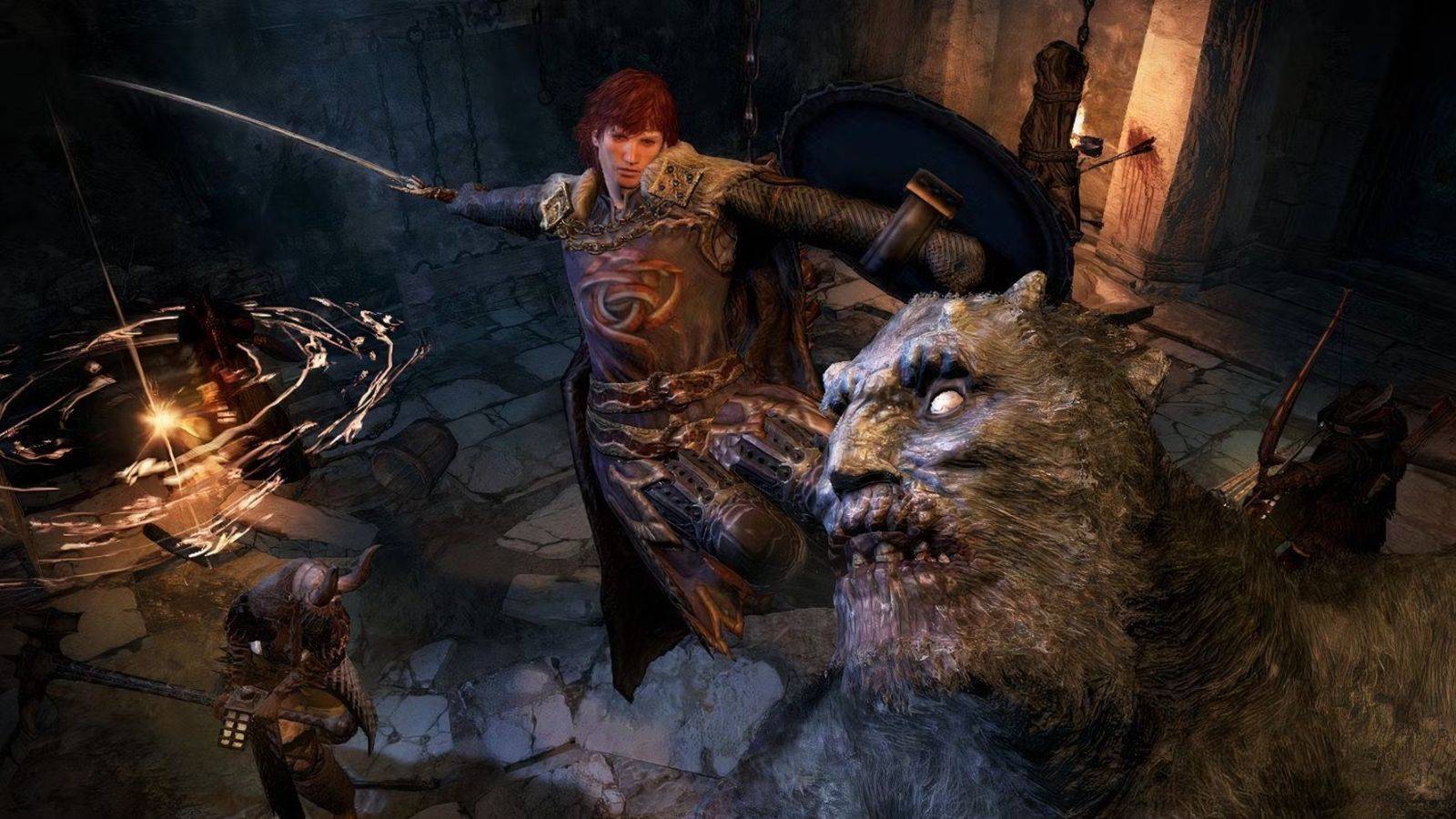
Releasing on the heels of The Elder Scrolls 5: Skyrim (seriously, we’re talking less than five months later), Dragon’s Dogma was facing an uphill battle from the hop, and that was before players got their hands on it and realized just how weird it is. This game does not play like other RPGs out there. First off, you need an item to fast travel, and it’s not exactly a common item, so you’re pretty much walking everywhere. You also don’t have a “party” by traditional RPG standards; instead, you have a Pawn, who you design alongside your character and who travels and fights with you. Traveling at night — which is pitch black, unlike the moonlit glow of most RPG nights — makes enemies twice as deadly.
The combat, though. Oh, the beautiful combat. Dragon’s Dogma is definitely on the “action” end of the action RPG spectrum. Hits have a serious impact, and large characters like Warriors and Fighters can send enemies flying with a well-timed swing. Ranged characters like Rangers and Striders must stay mobile, lining up a shot and then moving to stay out of danger or to sneak up behind enemies for a stealth attack. Meanwhile, magic users like Mages are extremely powerful, calling down massive, world-rending spells that are a sight to behold. Then, of course, there’s Dragon’s Dogma’s iconic mechanic: enemy climbing. With a well-timed jump, your character can scale larger enemies and attack their weak points, sort of like a more frantic Shadow of the Colossus. This is very cool when battling a towering cyclops or a fire-breathing manticore, but climb on the back of a griffon, and it may just fly away with you along for the ride. There is very little that’s traditional about Dragon’s Dogma, and yet it excels at everything it does, and that’s why fans still gush about it almost 15 years later.

10 Games With Open-Worlds That Feel Like Real Places You Could Actually Live In
Authentic, immersive, and believable — these are some of the most convincing open worlds that give a truly lived-in feeling.
