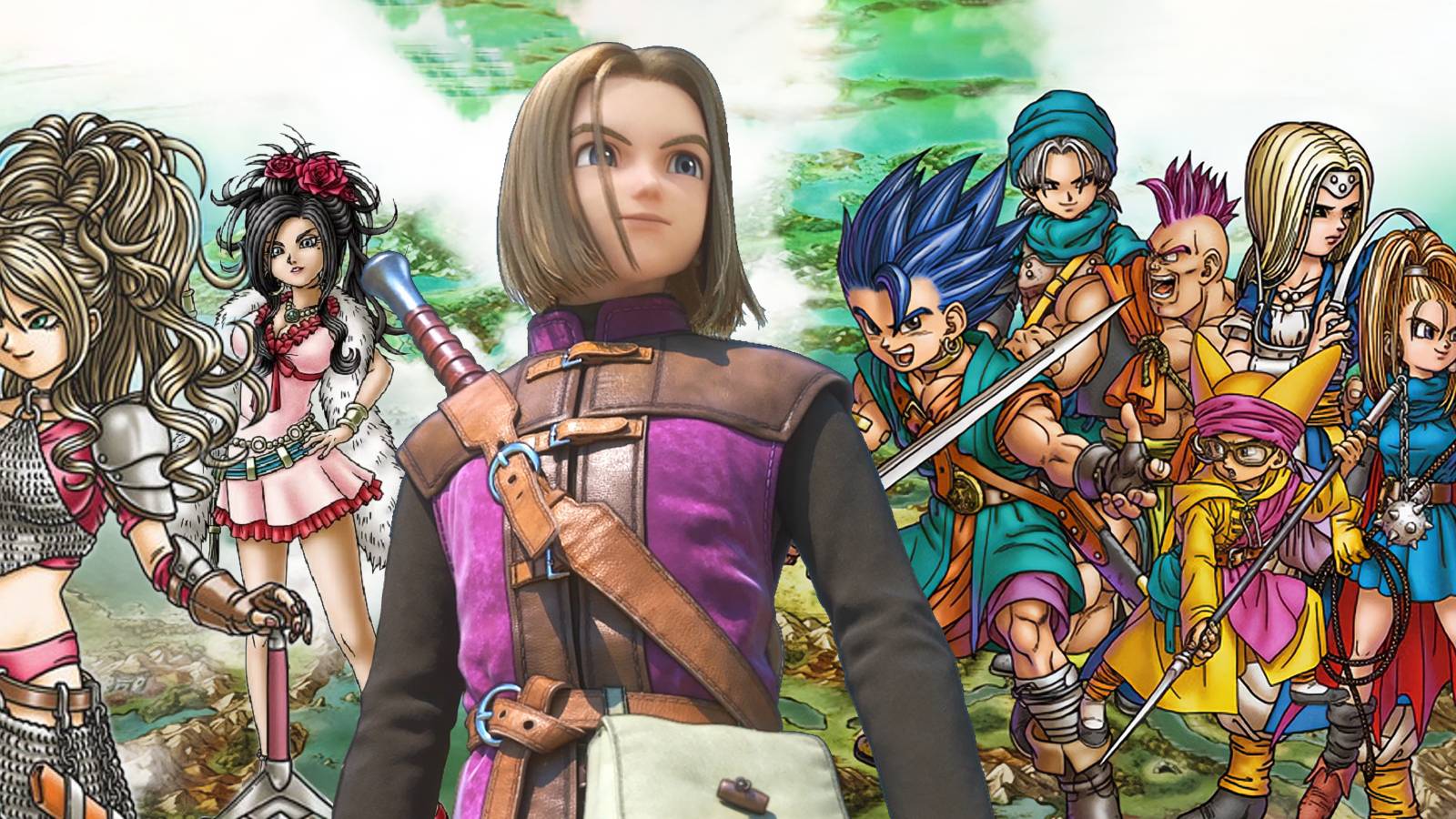
Dragon Quest is the grandfather of the JRPG genre. Akira Toriyama helped design one of the most incredible RPG worlds ever, and very few series can compare to the colorful cast of heroes and villains found in DQ games, many of whom are among the first characters that pop to mind when somebody thinks “fantasy RPG.” Like any gaming series, there are highs and lows to each installment and across the entire franchise.

Best HD-2D JRPGs, Ranked
HD-2D JRPGs bring the nostalgia of classic JRPGs to the modern era, and these games are the best of their kind.
Ranking the Dragon Quest games that have provided players with a lot of enjoyment isn’t easy. Still, looking at the series objectively, each Dragon Quest title stands alone for several reasons. The mainline series avoids falling into the worst category, but not all Dragon Quest games are created equal.
We will list remakes as separate entries; however, we are not going to cover rereleases or minor remasters.
Updated on February 8, 2026, by Mark Sammut: Dragon Quest 7 Reimagined is finally out, and the remake is another triumph for Square Enix’s JRPG franchise. Although not perfect, this version is the best way to experience DQ7, but how does it rank among the best entries in the series? I have only put in a bit more than 10 hours into Reimagined so far, so its current ranking is subject to change if the game improves or declines substantial after this point.
15
Dragon Quest 10
An MMORPG Transformed Into A Single-Player RPG
Dragon Quest 10 is the only game in the series to be an MMORPG rather than a single-player RPG. In many ways, Dragon Quest 10 utilizes the MMORPG genre creatively. At the very start of the game, players design their characters – only for them to perish. The player then starts the process over again, except they choose another race for their soul to inhabit.
While it is an interesting twist, especially for an MMORPG, the story falls short of the other mainline Dragon Quest titles. The lack of a Western release is also a major disappointment to fans of the series. An offline version was launched in 2022 but is currently restricted to Japanese territories. A translation project for Dragon Quest 10 makes it playable in English thanks to dedicated fans.
14
Dragon Quest 2: Luminaries Of The Legendary Line
A Challenging Sequel With Improved Mechanics
Dragon Quest 2 is a classic. It may be harsh to compare the older Dragon Quest games to the newer entries, but the second installment in the series stands its ground quite well. Following Dragon Quest 1 was no small feat, but the sequel polished the RPG mechanics to make it a more enjoyable experience.
As is often the case with revisiting older games, Dragon Quest 2: Luminaries Of The Legendary Line can be a slog. This is because of the outdated mechanics and the brutal difficulty. Dragon Quest 2 is considered one of, if not the most brutal Dragon Quest game, which can make the 16-hour adventure a testing experience. The Japanese version launched in 1987, but Western audiences had to wait until 1990 for its NES release as Dragon Warrior 2.
13
Dragon Quest (1986)
A Dated But Fun First Entry In The Legendary Series

Dragon Quest
- Released
-
May 27, 1986
- ESRB
-
t
- Developer(s)
-
Chunsoft
Dragon Quest is the game that started it all. It is wonderfully nostalgic to go back and play the first game. The game is not as polished as others in the series, but it still holds up pretty well. More importantly, the game has to get extra points for being the starting point for one of the best RPG series.

The Best Modern-Day JRPGs, Ranked
Modern JRPG titles still definitely live up to older classics. Here’s a look at the best of the genre from the last few years.
For those looking to dive into the Dragon Quest series for the first time, the first entry may appear to be the perfect starting point. However, the game is dated today and can be a struggle to endure, even for pre-existing fans. Consequently, starting with the modern entries before seeing how it all began is the best approach. Despite being released on multiple Japanese platforms, the English versions of Dragon Quest only launched on the NES, Game Boy Color, Android, and iOS.
12
Dragon Warrior 7 (Dragon Quest 7 On PS1)
One Of The Biggest JRPGs On The PS1
Dragon Warrior 7 launched on the PS1 in 2001 when the PS2 was already on the shelves. Despite being a massive game, it looked and felt dated when Final Fantasy 10 launched a few weeks later. Enix’s decision not to release it outside of North America and Japan further diminished its mainstream appeal. However, Dragon Warrior 7, known as Dragon Quest 7 in Japan, catered more to hardcore JRPG fans who appreciated lengthy stories and had the endurance for relentless random battles.
The seventh Dragon Quest is a challenging game on the PS1 and can potentially last players up to 100 hours, but it’s not the most accessible to newcomers or old-school fans of the classics. The amount of random battles will test the most dedicated fan’s patience, but it was still a standout JRPG on the PS1.
11
Dragon Quest 3: The Seeds Of Salvation
An Innovative JRPG Ahead Of Its Time
Dragon Quest 3 is one of the most popular titles in the series, and it’s clear to see why. The game added several new mechanics, breaking new ground with a title far ahead of its time. The original DQ3 was released in 1988 on the Super Famicom in Japan, coming to the West a few years later. While the NES version was still great, the 2001 GBC version might have been most people’s introduction to this classic.
Innovations like the day and night cycle in Dragon Quest 3 were genre-defining and made the world feel immersive. It also heavily expanded on the open-world aspects of the first two games, giving it the feel of a sprawling epic. A 2D-HD remake of Dragon Quest 3, and perhaps the definitive version of this classic title, is available now.
10
Dragon Quest 6: Realms Of Revelation
An Excellent Entry With A Dream And Real-World Mechanic
Dragon Quest 6 has all the features fans expect from the series. The class system is back and better than ever. The protagonists will explore three worlds plagued by an unknown evil, which makes it feel unique and fun to explore, and the characters are well-written, charming, and funny. The game begins with the protagonist waking up from a nightmare before getting woke up by his story and starting his journey.
Realms of Revelation is a solid entry in the series, and fans of traditional JRPGs won’t be disappointed. It features a Real and Dreamworld mechanic that cleverly integrates. It’s surprisingly well-paced, and the mechanics and progression open up to the player, keeping things interesting. Dragon Quest 6 has an excellent job system.
Players can change their class, retain the abilities earned, and move on to something else without spending too much time grinding. Dragon Quest 6 was initially launched in Japan in 1995. However, Western audiences had to wait until 2011 to play its remake on the DS. The DS version features a better translation with quality-of-life improvements that utilize the handheld’s dual screen. For example, the maps of both worlds are displayed at the top.
9
Dragon Quest 7: Fragments Of The Forgotten Past (Remake)
A Classic JRPG That Is Lighthearted And Low-Stress
Dragon Quest 7 is a lengthy game with substantial content on the PS1 and 3DS. The game’s 70-plus hour length may attract or deter gaming fans, but the 3DS version’s portability makes it a better experience overall. Additionally, the 3DS version made the seventh Dragon Quest game accessible to European fans who missed it the first time without needing to import it.
The appeal of Dragon Quest 7 extends beyond its availability; it is an outstanding game. The remake also incorporates significant quality-of-life enhancements. The relentless random battles from the PS1 version have been removed, with enemies that can be avoided. The visuals have been upgraded over the PS1 original with better-looking character models and more colorful environments. Dragon Quest 7’s story is still huge with a healthy amount of side quests and content, but the pacing feels better on the 3DS. It’s shorter than the original because random battles aren’t interrupting the party every three or four steps. Still, Dragon Quest 7 is the biggest game in the series and one of the best titles on Nintendo’s handheld.
8
Dragon Quest 4: Chapters Of The Chosen
Arguably The Best Character Development In The Series
Dragon Quest 4 has gameplay mechanics that make it unique in the series. The game is split into five chapters, focusing on the hero and the supporting cast. This narrative structure was and still is groundbreaking and offers a unique way to build toward character development. The Octopath Traveler series has a similar method of character building, and so does Final Fantasy 6.
Players connect with their companion characters as they see their entire backstory through their eyes. The last chapter is dedicated to the main character, who is joined by four beloved characters from the preceding chapters. Its story is straightforward, but the character chapters, excellent script, and the localization featuring multiple regional accents made DQ 4 feel like a step-up for the series.
7
Dragon Quest 7: Reimagined
Remaking One Of The Most Divisive Dragon Quest Games
Unlike the franchise’s modern 2D-HD remakes, Dragon Quest 7: Reimagined takes a way more exhaustive and expansive look at its ancestor. Considering this entry had already received a 3DS version that revamped the PS1 original’s dated looks, a remake would not have been worthwhile unless it brought more to the plate than just better visuals. For better or worse, DQ7 Reimagined lives up to its title and makes sweeping changes, most of which are positive (but not all of them). Obviously, the new art style is the loudest transformation, and I imagine it will be polarizing among players. The graphics are objectively gorgeous, but the puppet-esque designs are an acquired taste that might not hit the mark with everyone. If you are a traditionalist when it comes to Dragon Quest‘s aesthetic, you might struggle with this one.

How To Increase Stats in Dragon Quest 7 Reimagined
In Dragon Quest 7 Reimagined, there’s a way to permanently increase the stats of characters. Here’s the secret to becoming real powerful in DQ7.
As inescapable as the new visuals are, this change is ultimately superficial, at least compared to everything else. As stated in its own entry, the original DQ7 is the slowest game in the franchise, taking way too long to get going and lacking much in the way of momentum during most of its run. Reimagined directly addresses this element by providing a far more streamlined experience that gets to the point a lot quicker, making for a more accessible onboarding process. That said, this change slightly damages the original game’s laid-back, adventurous tone, resulting in a campaign that feels less unique but not necessarily worse. Some parts of DQ7 had to be cut from the remake to make for a smoother journey, and it will vary from player to player whether this trade is worth it.
The turn-based combat is fantastic, benefiting from new special moves and a vocation system that allows two jobs to be assigned to each character. You are given plenty of freedom to mold your party to your liking, creating combinations that can be inspired, bizarre, or deadly. Despite its streamlined structure, the story is still told fairly well, and you still feel like you are going through episodic adventures that are slowly building toward a climax.
DQ7 Reimagined deserves props for including a lot of accessibility options so you can decide how difficult it is. I would recommend tweaking the default settings as they make the game a bit too easy.
6
Dragon Quest 9: Sentinels Of The Starry Skies
Engaging Story And Character With Effective Co-Op
Dragon Quest 9 has one unique feature that sets it apart from others in the series. Sentinels Of The Starry Skies has a cooperative story. There are a couple of kinks when playing multiplayer. The co-op mode will unlock after around 4–5 hours of playing through the story, and it’s better for short bursts. The loot and story progression are only saved on the host’s profile, and there’s no way to transfer treasure and items to the guest player. Moreover, some parts of the game’s story are restricted to solo mode only. Despite that, co-op mode is a fun gimmick that runs surprisingly well for the most part.
Dragon Quest 9 tells a simplistic but engaging story that follows an angel trying to reclaim their wings and find their way back to heaven. The protagonist travels from town to town, helping the locals. The story develops quickly with rewards that keep the gameplay interesting. Visually, it’s one of the most impressive-looking and colorful games on the DS and holds up very well in the genre.
