The world of fiction, fantasy, and sci-fi has had its fair share of deities, all influencing and directing their world’s events in some form or another. In RPGs like Dungeons & Dragons, the gods often end up as the crux of some awesome story moment or the big bosses the heroes face. Meanwhile, hits like Percy Jackson present the gods as more “human” in nature, interacting with their demigod children as they attend Camp Half-Blood. However, gods in fiction aren’t limited to just these occurrences; gods as concepts are already largely explored in many other fictional works.
The 10 Most Powerful Wizards In Fiction, Ranked
Merlin, Gandalf, Dumbledore, and Vivi are just a few of the most overpowered wizards in the history of fiction, from legends to movies and games.
In fact, the idea of godhood is often referenced across pop culture media in a myriad of ways — ranging from experiments gone wrong, beings of incomprehensible power, and depictions so surreal they resemble more art than the traditional “image” of gods as, say, those who were on Kratos’ hit list in God of War. However, when “ranking” gods that have appeared across fiction, which deities stand out not just in their characterization, but in their powersets, and the way they influence the world at large?
10
Doctor Manhattan (Watchmen)
Man-Made God, In All His Ungloriousness

Watchmen
- Release Date
-
March 6, 2009
- Runtime
-
163 minutes
- Director
-
Zack Synder
- Product of the Manhattan Project
- Complete control over the intrinsic fields of reality around him
- Showcased his eventual disillusionment with mortal affairs
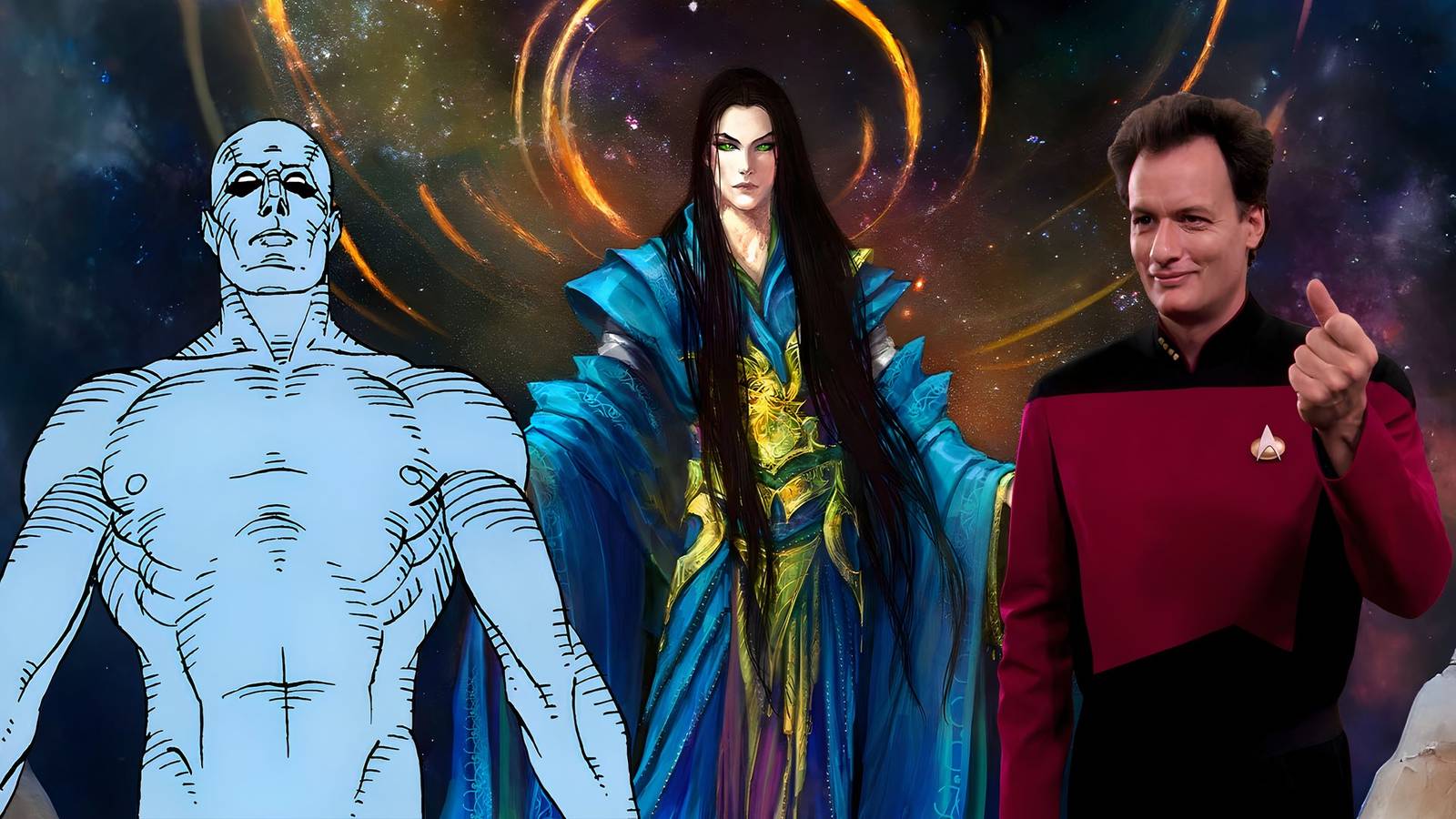
When the atomic physicist Osterman is accidentally trapped in an active test chamber of the Manhattan Project, he is torn into pieces before eventually reappearing as the blue-skinned Doctor Manhattan. As the United States discovered Doctor Manhattan’s complete control over intrinsic fields, he became the crux that would lead to the positioning of America as a global leader. Doctor Manhattan eventually senses the Flash manipulating time itself, leading to his discovery of the DC Multiverse from beyond his home in Watchmen, and his influence cost its denizens ten years of their lives in DC Rebirth.
Unlike other gods, Doctor Manhattan has a more apparent powerset. As someone who can manipulate intrinsic fields, he can reshape himself and others — objects, people, anything — around him to his will. This also makes him nigh-immortal, as even disintegration can force him to reintegrate himself. He can teleport through quantum tunnelling and possesses some degree of time travel. This power slowly warped Doctor Manhattan’s view on mortality and life itself, seeing human affairs as rather inconsequential at best. While eventually coming to the conclusion that living things are “thermodynamic miracles,” Doctor Manhattan’s “logical” approach to protecting Earth is a reflection of his apotheosis into a god who got a glimpse of things beyond our understanding.
9
The Q Continuum (Star Trek)
Reality Manipulators Who Love Testing Living Things
- Residents of an extra-dimensional plane incomprehensible to the known universe
- Possess immense reality-manipulating powers
- Love testing living things
It was during Jean-Luc Picard’s maiden voyage that the Enterprise first encountered Q of the Q Continuum, a society of reality-manipulators residing in an extra-dimensional plane of the same name. The being known as Q originally condemned humanity to destruction, had it not been for Jean-Luc persuading Q to give humanity a chance to show their potential for evolution. Unbeknownst to Jean-Luc, his entire voyage was Q’s test for humanity. This led to an uncomfortable relationship between Q and many members of Starfleet, specifically Jean-Luc, Kathryn Janeway, and even Benjamin Sisko.
It’s evidently challenging for a sci-fi universe like Star Trek to grasp the equivalent of god-like beings in the Q, which is what makes their interactions with Starfleet so interesting. The Q are said not to interfere in the affairs of the Prophets, similarly powerful individuals residing in the Bajoran Wormhole. They are also fierce opponents of Guinan’s species, although this has never been explored. Thanks to John de Lancie’s portrayal of Q, the species is demonstrated to be equally cunning and mischievous, with a penchant for curiosity and testing those they deem to have the potential to be like them.
8
Elder Gods (Lovecraft)
The Incomprehensible Equivalents Of The Great Old Ones

- Extradimensional former rulers of Earth
- Created what would become the Great Old Ones
- Incomprehensibly benevolent, almost equal in power to the Great Old Ones
- Ancestors of psychics
Not all is lost in the eldritch horrors of H.P. Lovecraft, as the Lovecraftian terrors of the Great Old Ones have an equal enemy in the form of the Elder Gods. They are said to be rulers of another dimension, from which they brought themselves and Earth into the known universe. The Elder Gods were also responsible for creating the Great Old Ones to be their slaves, and eventually fought them when they rebelled. After the Great Old Ones were banished, the Elder Gods retreated to their new home in Betelgeuse. However, they were known to procreate with ancient humans, and it’s implied that modern psychics were actually their descendants.
While it’s true that H.P. Lovecraft’s writing of the Great Old Ones exhibits just how incomprehensible the idea of a being even “close” to a god should be, it’s even more interesting to encounter benevolent analogs to these creatures. Of course, “benevolent” in this sense is nowhere near being “all-good,” but rather with a determination to protect Earth for reasons that are probably too complex to even be considered “reasons.”
7
Light And Darkness (Destiny)
Fundamental Forces Of The Universe Outside Of It

Destiny



7/10
- Released
-
September 9, 2014
- ESRB
-
T for Teen
-Animated Blood
-Violence
- Paracausal entities that are properties of the mathematical foundation of reality
- Responsible for the creation of the multiverse
- Consists of an ultimate creator and ultimate destroyer
Players of Destiny take the role of Guardians, wielders of Light tasked with banishing the forces of Darkness and protect the Solar System from harm. As it turns out, this “war” between Light and Darkness extends from a time before time. Throughout the game, it’s revealed that Light and Darkness are paracausal forces — existing outside causality — and are properties tied to the mathematical foundation of reality itself. They used to play the equivalent of John Conway’s “Game of Life” with “flowers,” where the endgame of one prevailing pattern often frustrated the Light. Tired of always seeing the same outcome, it turned itself into a rule that rewarded those who try to enact change and possibility. To avoid ruining the game, the Darkness did the same, this time as a force of stagnation, to stop growth and pull it into one final, self-sustaining pattern.
10 FPS Games With Better Gameplay Than Destiny 2
If you’re a Destiny 2 player looking to spice up your FPS library, try these titles with arguably superior gameplay.
This “game” they played alluded to simulations created and destroyed in probability space, using rules and patterns tied to the most fundamental of maths. When the Light and Darkness intervened in the game, they unexpectedly manifested one of these simulations into the known universe. It’s for this reason that Light cannot “directly” exert itself and instead acts through agents such as Ghosts and the Guardians, and the same thing with Darkness through the Witness. Tying the ever-present conflict between “good” and “evil” to a quasi-philosophical affair turned Destiny 2’s otherwise action-packed story into one with surprising depth that isn’t often explored in its genre.
Who’s That Character?

Identify the silhouettes before time runs out.
Identify the silhouettes before time runs out.
Easy (7.5s)Medium (5.0s)Hard (2.5s)Permadeath (2.5s)
6
Eru Iluvatar (The Lord Of The Rings)
A God Who Is More Composer Than Conversationalist

- Communicates his (often-misunderstood) purpose through sound
- Created the world through the Music of the Ainur
- Used the Flame Imperishable to create reality
It’s no surprise that The Lord of the Rings, in itself perhaps the template of modern fantasy fiction, also had an interesting take on gods and divinity. Throughout its stories, mortals in Arda are often influenced by the Valar and the Maiar, both encompassing the Ainur or primordial beings created by Eru Iluvatar through his Sacred Fire before ordering Ea through his Music. Unlike other gods in fiction, Eru Iluvatar is the only being in Tolkien lore capable of true “creation”. Everything else, including the rebellion of his first creation, Melkor, and tainting Ea with his discord, was all intended imperfections of the Music of the Ainur.
Similar to the Roman Catholic concept of “god,” Eru doesn’t intervene in the affairs of the Ainur — at least until Dagor Dagorath, the prophesied last days. Eru is unique compared to most other gods in fiction due to a distinct focus on creation through song. In fact, when he manifested Ainur through his Sacred Fire, it was through teaching Music that Eru instilled how they can “listen” to themes close to their aspects, and that they can “harmonize” to create tunes. It’s through these Themes that various aspects of Ea came to life, with the Third being particularly interesting, as this revealed the plans for the creation and awakening of Elves and Man, and then the rest of the species.
5
Tiamat (Dungeons & Dragons)
Represents An Evolving God Across The IP
- Created by
-
E. Gary Gygax, Dave Arneson
- Movie
-
Dungeons & Dragons: Honor Among Thieves
- Evolved from a mere dark dragon creator into an actual deity
- Five-headed creator-god of evil chromatic dragons
- Characterized further in other campaign settings, where she is always a variant of a god of evil
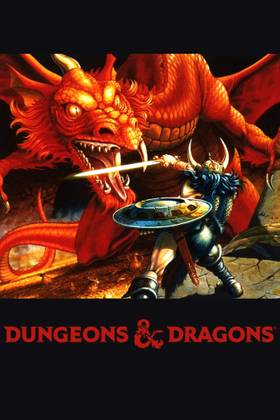
While it’s no surprise that each Dungeons & Dragons campaign setting’s divine roster is also dependent on their cosmology, one entity has become infamous throughout the D&D metaplot: Tiamat. Introduced in OG D&D as simply the Dragon Queen, “Tiamat” received her name in AD&D, eventually established as the Queen of Darkness and ruler of Avernus, the first of the Nine Hells. Being a dragon deity, Tiamat often made appearances in either the Dungeon Master’s Guide or Draconomicon books (among others) between 2nd to 4th Edition before becoming more prominent in 5th Edition.
What makes Tiamat an iconic goddess is how she represents the overarching “evolution” of a character concept across a long-spanning IP. She is Takhsis in Dragonlance and the source of all evil. In Eberron, she is a powerful Overlord dragon so fearsome that dragons made her the Draconic God of Greed and Power. In the Forgotten Realms, she was the Lesser God of Chaos in the Untheric Pantheon, the Lesser God of Greed in the Draconic Pantheon, and now the Goddess of Evil and eternal rival of her brother Bahamut in the Faerunian Pantheon.
4
The C’tan And Chaos Gods (Warhammer 40K)
Beings Of Energy And Emotion
- Created by
-
Rick Priestley
- Creation Year
-
1987
- C’tan were beings as old as the universe itself
- C’tan were star vampires incapable of properly perceiving the material universe
- C’tan needed physical shells made from living metal necrodermis to interact with three-dimensional space
- Chaos Gods arose from the discord within the psychically sensitive Warp
- Chaos Gods require each other for stability (ironically), which means no Chaos God will truly dominate
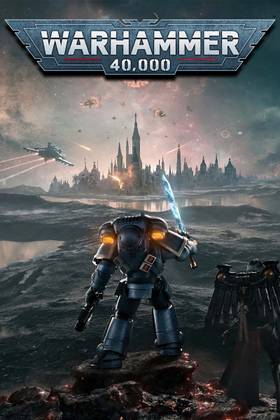
The unspeakable horrors of the Warp remain a reason why the grimdark world of Warhammer 40K is such a terrifying setting in fiction, but it wasn’t always like this. When the universe began, the C’tan already existed. These “star vampires” are beings of pure energy that feed on stars, incapable of truly manifesting in realspace. The Necrontyr gave living metal vessels to the C’tan to help them fight the Old Ones that enslaved them, only for the latter to betray them with immortality in exchange for their souls. This eventually led to what’s known as the War in Heaven — a pivotal moment millions of years ago that would influence a large part of Warhammer 40K cosmology in the “present” 41st Millennium.
Warhammer 40K: Strongest Space Marine Chapters
Warhammer 40K has featured a number of space marine chapters, but among them, which are the most powerful?
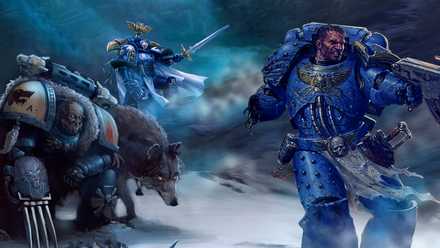
After the Necrontyr became the immortal Necron servants of the C’tan, they almost pushed the Old Ones to extinction. To counter them, the Old Ones used their scientific prowess to build races with a strong connection to the Warp — a place of raw emotions that the C’tan abhor. While this led to the creation of the psychically powerful Aeldari, the usage of the Warp in the war also poured a relentless stream of discord into it. This resulted in the creation of the Chaos Gods, the very essences of rage (Khorne), decay (Nurgle), change (Tzeentch), and eventually, excess (Slaanesh). Warhammer 40K tying war into this part of its cosmogony is no surprise, especially connecting the Chaos Gods as more “inevitabilities” born out of the instability of the psyche, and the C’tan being more of a force of its own. Both give the origin story of the Chaos Gods a grimdark flavor exclusive to the franchise.
3
Arceus (Pokemon)
The Creator Of The Universe Can Be Captured In A Ball
- The deity from which the Pokemon universe came to be
- Has an alternate form for each Pokemon type
- Surprisingly, it allows itself to be caught by the Trainer
If not Starters, it’s Legendaries and Mythicals that players always look forward to in every new Pokemon game, and part of this is tied to how they influence some fundamental aspect of the Pokemon lore. One such Mythical Pokemon is Arceus in Generation 4, which was soon revealed to be the actual creator of the Pokemon universe itself. According to Pokemon cosmogony, Arceus was the “Original One” born out of an Egg in the void.
Through his power, Arceus created Pokemon that would represent key components of the known universe: space (Dialga), time (Palkia), antimatter (Giratina), as well as the blueprint of all Pokemon (Mew), alongside the willpower (Azelf), knowledge (Uxie), and emotion (Mesprit) they possess. What makes Arceus an iconic deity is how it can be caught and used in battle by Trainers, making it of a similar scope to other “regular” Pokemon in the game. In fact, using special items can give Arceus alternate forms based on each Pokemon type. Just imagine how weird it would be to have the creator of the universe in the palm of your hand, housed in the same technology that would catch the likes of Mr. Mime and Magikarp.
One’s And The Universe’s Consciousness
- A metaphorical concept representing the singular and collective unconscious
- Exacts a toll on human transmutation to gain one’s desire
- Never properly explained, only viewed through the consciousness of others
As brothers Edward and Alphonse Elric explore the world seeking the “true” Philosopher’s Stone, Fullmetal Alchemist also reveals a horrific truth about their past. After attempting to resurrect their mother, Ed lost an arm and a leg, while Alphonse’s soul had to be transferred into a suit of armor. This loss in the aftermath of human transmutation was exacted by The Truth, the being inside their consciousness. In a world where science prevails through alchemy and alkahestry, this is the closest they have to a deity — and it’s also one of the most compelling concepts to ever grace anime.
As it turns out, any alchemist who performs human transmutation faces this entity representing a duality. First, the Truth stands as the “guardian” of the Gate to infinite knowledge — a representative of the universe’s collective unconscious. Second, the Truth is also its owner’s subconscious, confronting them and exacting a toll for attempting to play god. This duality is portrayed ingeniously in the story, as the Truth is also the same person; the punishment handed out is what the user deems “appropriate,” unbeknownst to them. Once the toll is paid, the entirety of the universe’s knowledge is shoved into the user’s mind, scarring them forever. When they return, the price is paid with the thing they value, their mind forcing them to forget the incomprehensible depth of knowledge they encountered.
1
Death (Discworld)
Has More Personality Than Most Other Gods In Fiction

- The personification of belief in the inevitability of death
- Has a cat
- Talks in unquoted small caps
Terry Pratchett’s Discworld established itself as a malleable realm of many wonders and oddities, chief of which is a cosmology where gods are just as strong as the beliefs associated with them. In Discworld mythology, anything that happens is associated with a god, which means there are an infinite number of gods as long as the concepts they control exist. However, in Discworld’s infinite cosmology, perhaps the most iconic deity is Death itself. The personification of Death in Discworld is ever-permeating across Pratchett’s other works. He always “speaks” in unquoted small caps — not because he’s shouting, but because he is a force of absolute endings, the one constant fact in the universe. That, and he has no vocal cords. Unlike other gods in fiction, Death is interesting in the way he embodies a divinity with a marked fascination with humanity.
Death is fond of cats, loves curry, and resides in a Victorian-era house (that is, in fact, a tesseract) within his own pocket dimension. He is often described as a god who prioritizes his duty — a psychopomp who escorts the dead to where they need to go. He also has a fondness for human behavior, particularly in how they get up despite the inevitability of their demise. It’s thanks to this fascination that he’s often sympathetic towards humans, often giving others a second chance at life, letting them play a game for an extra chance at living, the rules of which he often “forgets,” usually in a deserving human’s favor.

The 10 Best Anti-Heroes In Fiction, Ranked
From comics to video games, these anti-heroes are cultural symbols, establishing themselves as some of the most important characters in fiction.
