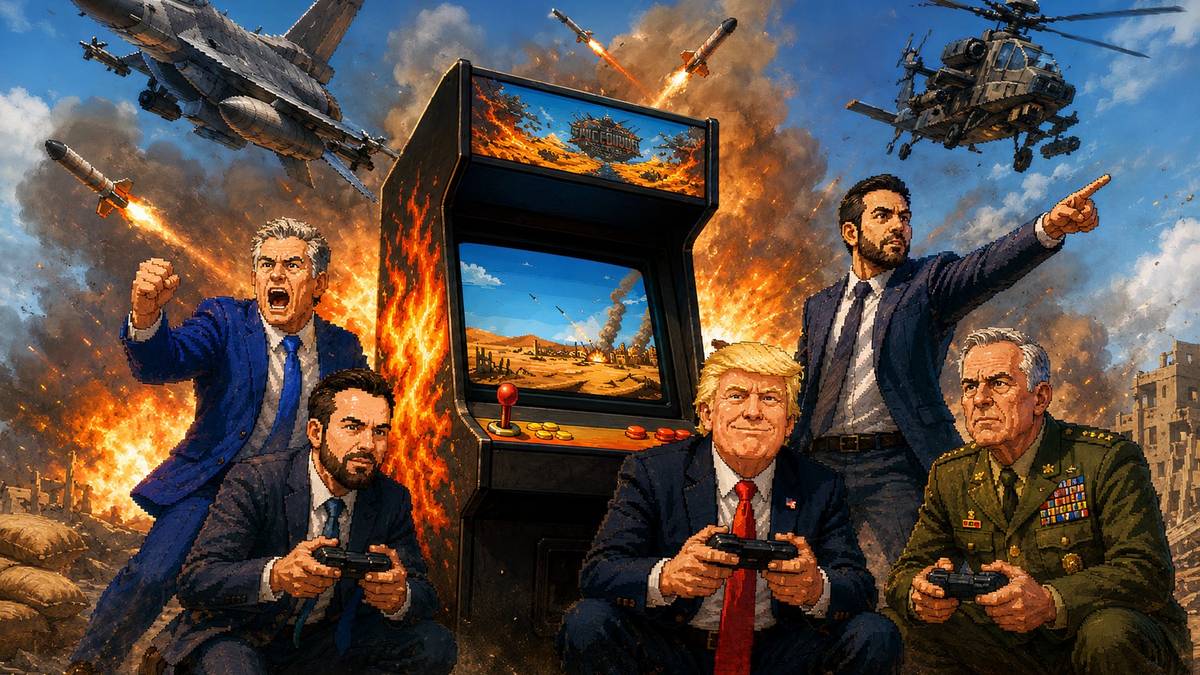
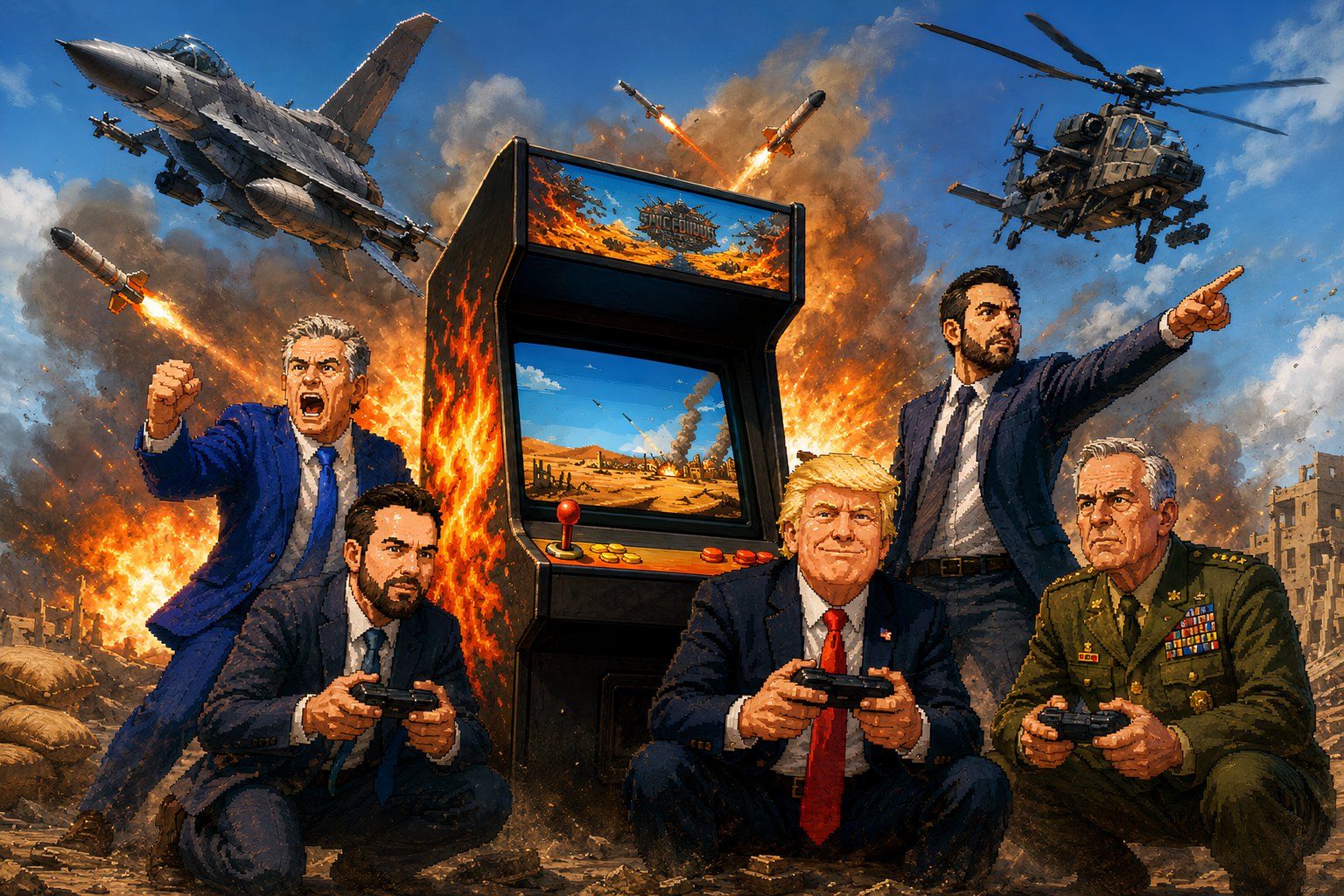
The White House released Call of Duty clips to the hype of real airstrikes on Iran. They bonded Grand Theft Auto footage of real missile strikes and called it patriotism. An anonymous art collective called Secret Handshake watched it all and decided the only reasonable response was to finish the joke.
That answer is Operation Epic Furious: Strait to Hella pixel art arcade game sitting on the National Mall in front of the DC War Memorial. It's undoubtedly the most politically charged video game of 2026, and it might also be one of the most cleverly designed objects of protest in recent memory.
The White House took the first step
Most political games want to teach you something. They load messages and lighten the mechanics, and the result usually feels more like interactive homework than an actual game worth playing. The developer has something to think about, and they'll get there whether the player is having fun or not. It becomes a lecture disguised as entertainment, and most players get into it before the credits roll. Operation Epic Furious it uses a completely different approach and that's why it's so effective. Secret Handshake trusted the game to speak, and it delivers.
Secret Handshake didn't invent the gamification of war. The Trump administration did it first and did it on official White House accounts for the whole world to see. Iron Man clips, Top Gun adjustments, Wii Sports footage linked to actual missile attacks on Iranian infrastructure. Propaganda has been a video game before Operation Epic Furious when it existed. Secret Handshake simply held up the mirror and forced everyone to look at what was already there. This is not satire for satire's sake. That's an accurate shot and it landed cleanly.
This game was designed so that you can never win
Here's something most political games never figure out: the message can be a mechanic. Operation Epic Furious it is intentionally, structurally unwinnable. You play as Donald Trump, navigating your way through a pixelated war zone, collecting barrels of oil, and battling a variety of enemies that include an Iranian schoolgirl, the Pope, and the DEI in person. Administration officials like Pete Hegseth and Kash Patel appear as allies to push you through missions with over-the-top dialogue. And no matter what you do, you can't win. The Strait of Hormuz remains closed. The war marches on. The game never ends because it was never designed to.
This design decision is more telling than any protest sign. He is not telling you that the war in Iran is unwinnable. It forces you to experience it. There's a huge difference between reading a thesis and living it, and the best games have always understood that difference better than any other medium. A novel can describe what it feels like to be trapped. The game can actually trap you. The fact that a guerilla art collective came up with this while the big studios are still delivering their thirtieth military shooter without consequence without a single critical thought is really worth sitting through.
This protest did not take place online and that matters
It would be easy to release this game as a browser game and call it a day. A lot of political art goes this route, getting a few thousand clicks and disappearing from the feed within a week. The Secret Handshake went even further. They built three physical arcade cabinets, drove them to Washington, and placed them outside the DC War Memorial, just steps from the Lincoln Memorial's reflecting pool. This option is not decorative. The format does the same job as the message.
Arcade cabinets are loud, public, communal and ephemeral. They require a crowd and invite strangers to share the experience side by side, and there is something truly powerful about what happens outside the war memorial. The fact that National Guard troops were spotted lining up to play on the Mall only adds to the already layered piece of political commentary. The game is also playable on epicfurious.com and has already been downloaded over 14,000 times, which means the audience is there and paying attention.
Why humor is the right weapon
The players have to sit with it. Call of Duty delivered more than thirty titles built around idealized military violence without consequences, and the gaming community largely shrugged it off. The franchise served as a recruiting tool and cultural normalizer for military intervention, and most players never thought about it because the game was tight and the lobbies were full. Operation Epic Furious forces to reckon with this comfort. It takes the precise aesthetic language that military shooters have spent decades perfecting and turns it against the machinery that co-opted it.
None of this would land without humor, and the humor is truly excellent. You open the game by either ordering a Diet Coke or invading Iran. Putin appears like a centaur. Your primary weapon is the Mar-a-Lazer. Low-flow shower heads are classified as threats to American freedom. Games that will make you laugh while thinking that they have a longer shelf life than serious political observations, and Secret Handshake knows that. More than 14,000 downloads in the first few days suggest that the audience does too.
Operation Epic Furious: Strait to Hell is just a free arcade game created by anonymous artists. It won't end the war in Iran or change any votes. But it does something that very few games ever do. It uses the medium with real intent, turning game design itself into an argument. The cabinets may be gone by the time you read this, but epicfurious.com isn't going anywhere. Insert a quarter. You'll lose, but it's worth every second.
