The gaming industry could be accused of chasing trends too often, and you'd be right most of the time. It wasn't long after that Fortnite Battle Royale it blew up that there were BR games everywhere. It wasn't long after that Overwatch that hero shooters appeared everywhere. And the same can be said for roguelike games, soulslike games, and basically every popular genre of the last decade. It's not just the genre where studios are sometimes unified, but also in the stories they tell.
There are a lot of revenge games out there – I'm not entirely sure what they are. If I had a dollar for every time a developer said they were inspired by a world that shut down during the COVID-19 pandemic, which is totally understandable, I could probably retire. And even if it could be boiled down to some form of groupthink or chasing trends, art is always a reflection of the world around it. And so I find it interesting that recent video game releases, including some of the top-rated games of 2026 so far, focus on healing.

Life is Strange: Reunion Review – A butterfly with very large wings
Life is Strange: Reunion manages to step up to the plate and pick up the ball dropped by its predecessor, Double Exposure.
These recovery stories come from a struggling industry. It's not even April yet and there have already been 13 closed studios and an estimated total of 3,000 layoffs. Those totals follow 10,500 estimated layoffs in 2023, 14,600 in 2024, and 5,300 in 2025. I can't imagine any developer feeling secure in their career right now, not with PlayStation closing studios like Bluepoint and Epic Games laying off. Fortnite developers. However it manifests in these individuals and the world around them, it is a great pain.
Many of the stories that came out of the pandemic were about the need for socialization, connection and friendship, and you could easily trace the isolating impact of the pandemic to the rise of the friendslop genre. Similarly, these layoffs (not to mention the overall state of the world that creates them) seem to have led to stories that so many people need right now: that healing is possible, that healing can happen, that healing is not a disservice to others. Such stories are a line of communication for players at such a time. What is received at the other end is entirely up to them. But there's no denying how the healing is so stark in so many 2026 video games, for reasons tied to the state of the industry and the world in general.
SPOILERS AHEAD — PLEASE SEE SUBHEAD AND SKIP SECTION IF REQUIRED
Resident Evil Requiem's Leon Kennedy Copes With Himself (Spoilers)
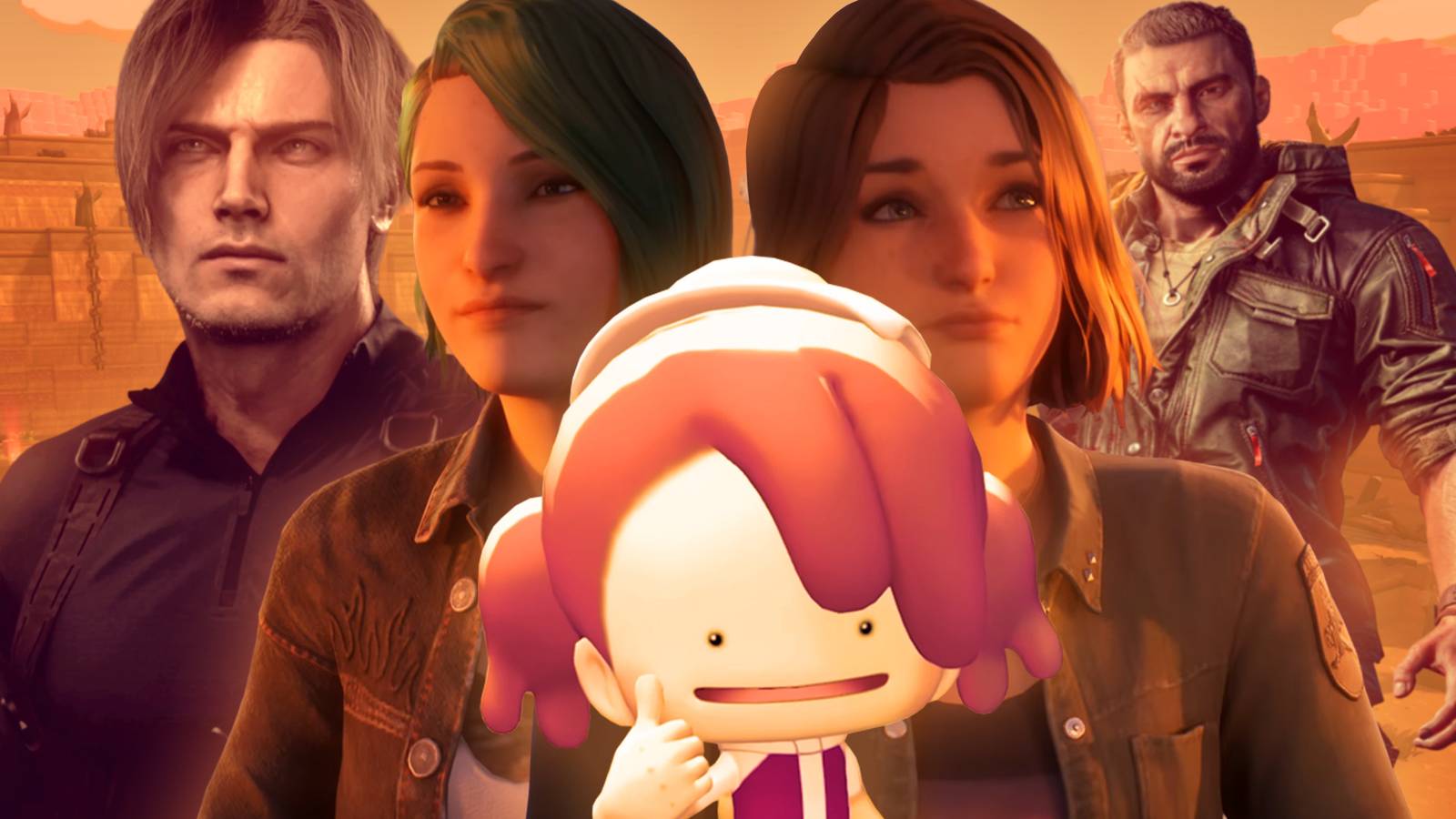
During my first playthrough Resident Evil RequiemI was frustrated with how Leon handled his Raccoon City syndrome. He dies from the start, but he barely seems to care. But it makes sense in hindsight. Over Resident Evil 2, Resident Evil 4and Resident Evil 6Leon has never known safety. Resident Evil 4 emphasizes his desperate need to save Ashley despite repeated losses while RE6 continuing the cycle, forcing him to kill the president and immediately move on to save the world. He survived everything thrown at him, but decades of violence, loss, and failure—especially in Raccoon City—hardened him. The result is someone so worn down that they no longer value their own life or especially surviving this disease.
RE9 brings him back to Raccoon City, the source of that trauma, and makes it clear that his PTSD still defines him. His apology to Kendo's daughter and his remarks about how he can't change anything show how deeply it still affects him, so much so that his illness becomes a physical aspect of his ongoing trauma. Leon's journey in Requiem is about facing the past that still haunts him, with Hunk and Tyrant acting as manifestations of it. RE RequiemHis two endings reflect his struggle: in one, he fails to heal, dies, and perpetuates the cycle himself. While Elpis heals him physically, the decision not to destroy him represents a chance to break this traumatic cycle. It's not a complete cure, sure, but Requiem hints at hope with Leon's marriage. He has a home, something waiting for him, someone who can accept his damage and help him continue to heal.
Pokopia symbolizes the literal act of healing (SPOILERS)
Popopia is a cozy game about finding Pokemon and restoring the devastated regions of Kanto to some new form of glory—not old glory, mind you, but once healed, you become something new. As players learn, the world itself has been damaged and destroyed by a series of natural disasters, so much so that people have left Pokémon on the PC system to protect them as they flee into space. These Pokemon share the pain of being abandoned, yet remain connected to a constant source of trauma. The end is bittersweet, the world is healing, but the journey is not over. People are out there, like Popopiathe end suggests, but the healing process continues long after the work is done.
Dying Light: The Beast Gives Angry Man a Choice (SPOILERS)
Dying Light: The Beast not a 2026 game, you're right, but Dying Light: The Beast just released a new version of the game called Restored Land. Nothing will regenerate in it – including zombies. Players are tasked with restoring the zones and bringing Castor Woods back to its glory through fun zombie killing. The healing metaphor there is as on the nose as Popopiabut it's worth remembering who Kyle Crane is Dying Light: The Beastalso.

The Story of Dying Light: The Beast is the story of the industry – Game Rant Advance
The origins and development of Dying Light: The Beast followed a series of events that reverberated throughout the gaming industry, both in development and in the media.
Kyle Crane suffers from good guy syndrome and has always had it because he was there to help him with a whimsical joke, but the Baron's experiments have produced an angrier, more monstrous and more serious beast. He still helps, he still sticks to who he is, but he walks the line between who he was and who he is. And his actions, especially in the Restored Earth, are as much about healing himself as they are about healing the world around him. It's a reminder: the past doesn't have to define your present or your future.
Life is Strange: Reunion Shows How Healing Isn't Linear (SPOILERS)
Life is Strange: Reunion it reunites Max and Chloe, and the story it tells is about healing not being linear. The world goes on and things may seem to be on the upswing, but one day everything can randomly come crashing down. Born from the trauma and pain of past decisions, from moments that shook the world, one small slip can send someone back into a spiral. Reunion reveals that va Double exposure a moment Max doesn't even remember, her pain and trauma set her and Chloe back on the path they are on now.
This journey contains traces of their past and the damage they have caused to themselves and others. The present brings hope and confidence, but every moment has the specter of an unknown future hanging over it. In many ways, it's about how traumatic the ending is Life is strange 1 it bleeds into every aspect and decision in Max and Chloe's lives, powers or not. It's a reminder that disasters big and small can start a spiral that seems constant. But Life is Strange: Reunion outlines a path to lifelong healing, facing future disasters and not wallowing in the past.
It's about accepting trauma and pain. The point is to understand that there is no way to undo the impact; not even Max's powers can do it. Unlike the original Life is strangeit's less about a devastating choice and sacrifice that ends badly one way or another, resulting in these moments you can't let go, and more about accepting imperfect outcomes, past pain, protecting yourself and your loved ones, and moving forward. Max and Chloe's happy ending just needed them to heal and get out of their own way.
Arrange the covers in the correct US release order.
Start
Arrange the covers in the correct US release order.
Easy (5) Medium (7) Hard (10)
So many of the best games of 2026 are about healing

When I was curious about the best games of the year so far, I was struck by how often this theme was present. The above mentioned are the biggest releases so far, but they are far from the only ones. Lost and Found Co. it's about helping a little dragon regain her strength—an act of healing. The hermit and the pigwith gameplay involving strong social anxiety, it's about resistance to corporate conspiracy and highlights the power of community collaboration over isolation – an act of healing.
Stacked together offers a peaceful, meditative game about protagonist Connie, who deals with nostalgia, loss, and change through her notebook. The end result, though it's up to the player, is closure with the past – an act of healing. Cairn it offers a narrative of losing what matters in attempting the impossible, and is a reflection on life. Again, it's up to the player, but the key choice is, you guessed it – the act of healing. Restoring Woolhaven and reawakening Yngy's power in the latest version for Cult of the Lamb (not a 2026 game), its Woolhaven DLC (2026 release) follows – an act of healing.
A suffering medical game industry
At the end of the day, it may not help the developers who tell those stories, the players who play those stories, and the industry that produces those stories. You just have to sit with it and do the best you can – the act of healing. That's what Leon had to do. That's what Pokemon the world had to do. Kyle Crane had to do that. Chloe and Max had to do that. Stories reflect the world around them; these stories may reflect yours as well.
And while these games can't fix everything, they remind us that the act of trying to heal, fix what we can, and keep going despite it all is worth it. For gamers and developers alike, this is news worth reading.
