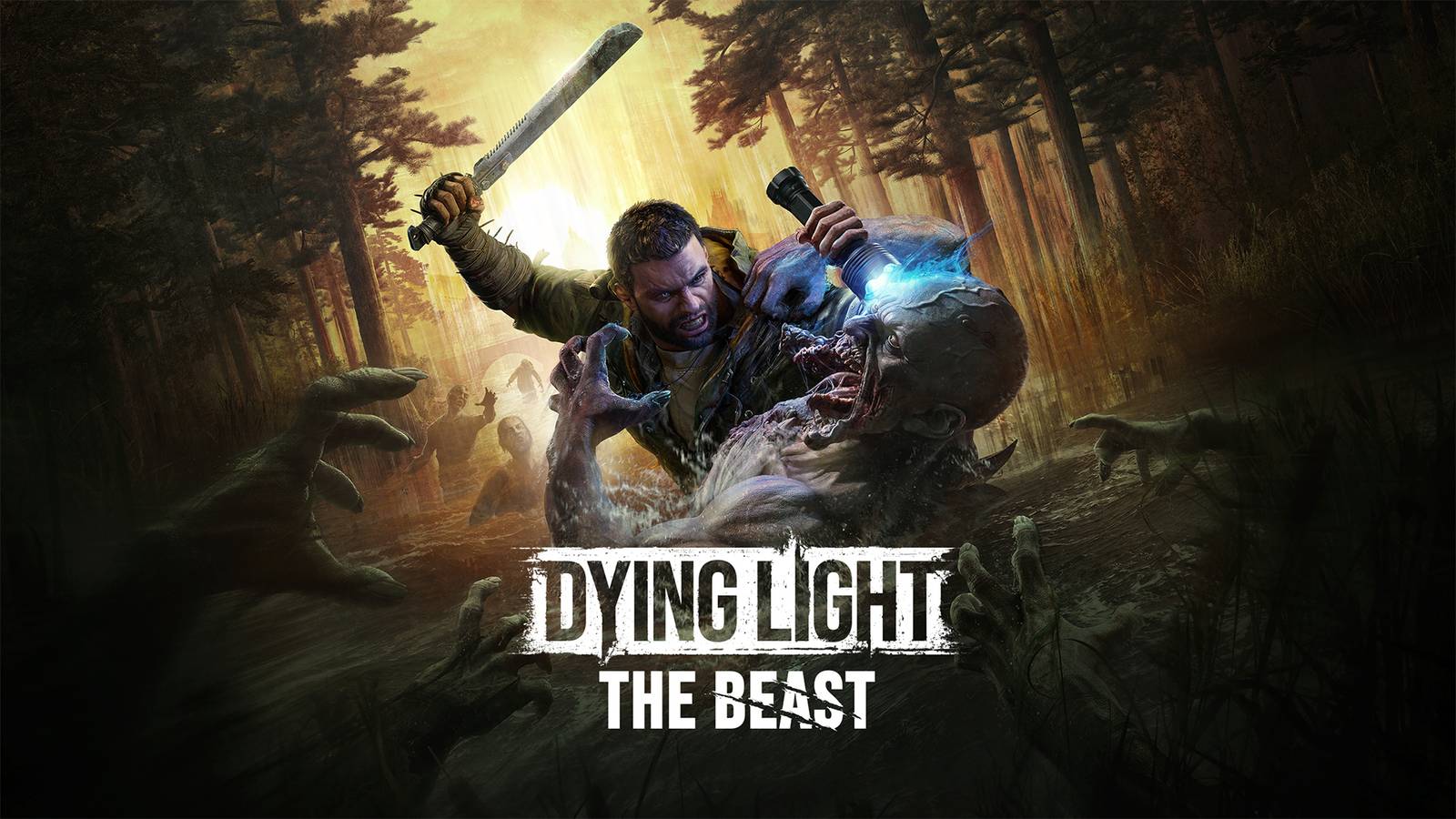
The Dying Light franchise has always thrived on its heart-pounding gameplay and fluid parkour mechanics, but with each entry, Techland has tried to evolve that formula. From the urban Harran to the city of Villedor, every installment has done its best to leave a distinct mark on the series’ identity. Now comes Dying Light: The Beast, a return to Kyle Crane’s story after years of silence, where he hunts down the man responsible for subjecting him to years of torture. There’s a different feel to this one, but it’s still Dying Light at its core.

Dying Light: The Beast isn’t content with merely rehashing old ideas though. Its new setting, Beast mode mechanic, and brutal chimera encounters make it feel like a fresh leap for the franchise, even with its familiar underpinnings. While the narrative leans heavily on a straightforward revenge arc, it’s supported by some of the strongest side quests in the series and a world that manages to feel both dangerous and stunningly beautiful. Add to that the gameplay that has always set Dying Light apart from its competitors, and The Beast stands out as the best the series has ever been.
Dying Light: The Beast Is a Classic Revenge Tale That Finds Its Heart in the Side Quests

While the goal of any Dying Light game is to offer players one of the most immersive zombie apocalypse experiences in gaming, those titles are not without memorable stories, and that remains true of Dying Light: The Beast as well. The main difference here is that, unlike its immediate predecessor Dying Light 2, The Beast‘s main story is strictly linear, though not to its detriment. What begins as a simple and somewhat cheesy revenge tale eventually unravels into bingeworthy TV, with plenty of surprises to keep players invested until the credits roll.
In Dying Light: The Beast, you play as Kyle Crane, the protagonist from the original Dying Light. After being captured by a villain known as the Baron and subjected to painful experiments over 13 years, Crane manages to escape, but those experiments have taken a physical and mental toll that has left him on the edge of humanity. Now half human, half beast, Crane struggles to control the beast within him on his path to revenge, as he plans to use his newfound strength against the very man who gave it to him.

As far as video game antagonists go, the Baron is as evil and heartless as they come, although more screen time during the campaign might have helped communicate that. For the most part, his character is developed through the lens of Crane’s desire for revenge, with the villain’s occasional threats from afar making him more of an annoyance than a legitimate danger. With so much of the story hinging on Crane’s quest to end the Baron’s life, more development for the antagonist might have only benefited the narrative. That being said, he eventually grows into a villain that is exceedingly easy to hate, giving more weight to the story’s conclusion and the tension leading up to it.
Where Dying Light: The Beast‘s story truly shines is in its side quests, and it makes almost every one of them worth doing. A good revenge tale will see its protagonist wrestling with their bitterness and humanity, and while the game’s campaign strictly features a one-dimensional Kyle Crane with a thirst for vengeance, its side quests bring out his compassionate, humanistic side in a way that the main story does not. This arguably makes Dying Light: The Beast‘s side quests all but essential if players want to get the most out of the overarching narrative, and it helps that these quests offer plenty of XP and other rewards as well.

It helps that Dying Light: The Beast‘s characters are voiced by some impeccable talent, with the voices behind the faces being just as convincing as their animations. It often feels like you’re having conversations with real people, as they have some of the most naturalistic facial expressions and body language in gaming, and it helps that their faces look as good as they do. All of these things combined really sells every story told in Dying Light: The Beast, from its most menial side quests to its revenge-fueled campaign.
I managed to roll credits on Dying Light: The Beast in around 35 hours, which I found surprising in a good way. This was after completing most of the Dark Zones, every side quest, and taking my time exploring the world of Castor Woods. The experience didn’t feel brief at all, and instead actually felt like the perfect amount of time to spend on the game. Once I finished the campaign, I still had several Dark Zones left to do, quite a few races, and areas of the open world I had yet to discover. Replayability is on the lower end, though, as it merely depends on whether players want to try the game again on a harder difficulty.
Dying Light: The Beast Balances Beauty, Brutality, and Beast Mode

Of course, Dying Light has always been about its iconic gameplay as well, and The Beast, for the most part, delivers. As it has been in every entry before it, Dying Light: The Beast‘s night experience is a major highlight of gameplay, though players are only forced to navigate it a handful of times throughout the campaign and certain side quests. Apart from these moments, it can easily be avoided by sleeping in a Safe Zone, of which there are plenty in the world. Double XP is offered at night, but Dying Light: The Beast‘s max level is only 15, and I was able to reach it before the end without ever intentionally going out into the dark.
Part of this, I feel, is because Dying Light: The Beast seems to want players to take in the beauty of Castor Woods — and it is undeniably gorgeous. Since it’s almost pitch black at night, those sights are left only to speculation. However, Dying Light: The Beast is without a doubt the best-looking game in the series to date, making the daylight sought after for more than just the increased safety it provides. Still, when the sun does go down in the game, it’s just as terrifying and adrenaline-pumping as it has always been, especially when a chase breaks out and a horde of Volatiles is on your tail.

Parkour is one of the core pillars of the Dying Light series, and it is still very strong in The Beast, despite Castor Woods’ more open areas. It does an excellent job of balancing environmental density with openness to allow for both its parkour and superb driving mechanics to have some time in the spotlight, so any players who were concerned Dying Light: The Beast‘s parkour would be put on the back burner in favor of a world that was merely meant to be looked at can rest easy. In fact, there are many times the game’s parkour system is the very thing that leads players to some incredibly beautiful vistas they won’t soon forget.
That said, Dying Light: The Beast‘s parkour can be hit-and-miss at times — more hit than miss, but inconsistent nonetheless. There are moments when Kyle won’t climb for some reason, and while those moments are fairly rare, they can be frustrating when they occur. It’s also somewhat easy to get caught on random terrain while moving, which can either ruin momentum or subject you to attacks from the infected. Even with these frustrations, though, it’s still thoroughly satisfying to leap across rooftops and rocks in Dying Light: The Beast while exploring the beautiful Castor Woods.

The game’s open world is massive on foot and only a bit smaller behind the wheel, with plenty of activities for players to do, including racing. Denser areas are populated with Dark Zones where players can loot valuable gear and consumables once and resources an unlimited number of times. The main issue here is that it all becomes a bit repetitive after a while. There is some variation to Dying Light: The Beast‘s many Dark Zones, but they’re micro variations, essentially resulting in the same process over and over again.
But one of the main draws of Dying Light: The Beast‘s gameplay is its namesake, Kyle Crane’s Beast mode, and the source of that power, dangerous infected known as chimeras. At regular intervals throughout the game’s campaign, players will face chimeras to earn more skill points useful for unlocking Crane’s Beast abilities, which range from the ability to control Beast mode to picking up large objects and throwing them while the mode is active. It works similarly to God of War‘s Spartan Rage mode, in that Kyle is briefly overcome by his inner Beast, thereby increasing his damage output and resistance as he tears his enemies apart.

These sequences are incredibly violent (another staple of the Dying Light series’ gameplay), but they are much more so in The Beast than they ever have been before. Similarly to games like Dead Island 2, every hit that lands on a foe in Dying Light: The Beast leaves a realistic mark on their flesh, with the game’s physics responding appropriately to the type of weapon players are using, even if it is Crane’s fists during or outside of Beast mode. Beast mode in Dying Light: The Beast is very balanced as well, as players can’t trigger it as often as they might think, making it more of an insurance policy for a chimera fight or when things get out of hand.
Each newly introduced chimera in the game acts as a major boss fight, and they can be some of its most thrilling moments. Unlike the normal infected roaming the open world, chimera fights all have unique mechanics that force players to adapt if they hope to survive. Some chimeras are nimble and prefer to fight from range, whereas others might be towering brutes that charge at you from across the arena or throw large objects like vehicles at you. Defeating these challenging enemies grants players more skill points to spend on Crane’s Beast tree in Dying Light: The Beast, making him more powerful for his eventual confrontation with the Baron.

Kyle has more than just his inner Beast to help him take down foes, too, with a wide variety of weapons and gear to loot and craft. There are several different gear sets players can acquire in Dying Light: The Beast that offer distinct passive bonuses, and its intuitive transmog system allows for wearing any combination of gear to be both effective and stylish. Then there are blunt weapons from baseball bats to hammers, sharp weapons like axes and blades, and ranged weapons like a bow and crossbow. Players can also still take advantage of the normal throwable items like knives, molotovs, and decoys — whichever suits the situation best.
There is one hangup here, though, that can be rather frustrating. It’s still possible to obtain blueprints for weapons and items and then craft them, but the cost of crafting and maintaining the highest-quality weapons in Dying Light: The Beast is extremely expensive, as certain resources are too rare. Feathers, for example, are exceedingly rare, and crafting a bow and the arrows to use it require more feathers than can be found organically in the world. This is one of the most disappointing aspects of Dying Light: The Beast‘s combat and crafting, especially considering how fun weapons like the bow are to use and how effective they can be.
Performance-wise, with how sprawling it is and how chaotic things can be at times, Dying Light: The Beast runs like a dream on PC. Frame rates are stable, loading times are short, and while there were one or two moments where I experienced strange visual artifacts, they were fleeting and not worth a second thought. I can’t speak for its console performance, but PC seems to be well optimized.
Dying Light: The Beast Finds Strength in Its Core

In the end, Dying Light: The Beast proves that Techland still knows how to craft a memorable zombie apocalypse, with visceral parkour and survival thrills to boot. Its linear revenge story is taken to greater heights by side quests that bring out Crane’s humanity, its open world is breathtaking despite some repetitive activities, and Beast Mode adds a ferocity that keeps combat feeling fresh and intense. With stable performance and plenty of memorable moments, it may not reinvent the franchise, but it stands as one of its most polished and engaging Dying Light games yet.

- Released
-
September 19, 2025
- ESRB
-
M For Mature 17+ // Blood and Gore, Intense Violence, Language, Use of Drugs
- Multiplayer
-
Online Co-Op
- Well-written story and side quests
- Strong parkour and driving mechanics
- Beast mode adds fresh combat intensity
- Stunningly beautiful open world
- Resource scarcity makes crafting frustrating
- Open world can feel repetitive
- Underdeveloped antagonist
Dying Light: The Beast launches on PC, Xbox Series X|S, and PlayStation 5 on September 18, 2025, and PlayStation 4 and Xbox One in late 2025. Game Rant was provided with a PC code for the purposes of this review.
