There are a lot of open-world games out there. It’s one of the most popular genres in gaming, and for many, these games are favorites because of how much they offer. There’s lots to do, lots to see, and not a lot of restrictions on when, where, and how you do and see them.
Unfortunately, as popular as the genre is, some great games still fall through the cracks. For every Skyrim and The Witcher 3, there are incredible open-world games that deserve way more attention than they get. The following games are just a handful of examples, but they don’t get talked about nearly enough. If you’re looking for an open-world game you might not have heard of, and that might offer something new in the space, these are the titles to check out.
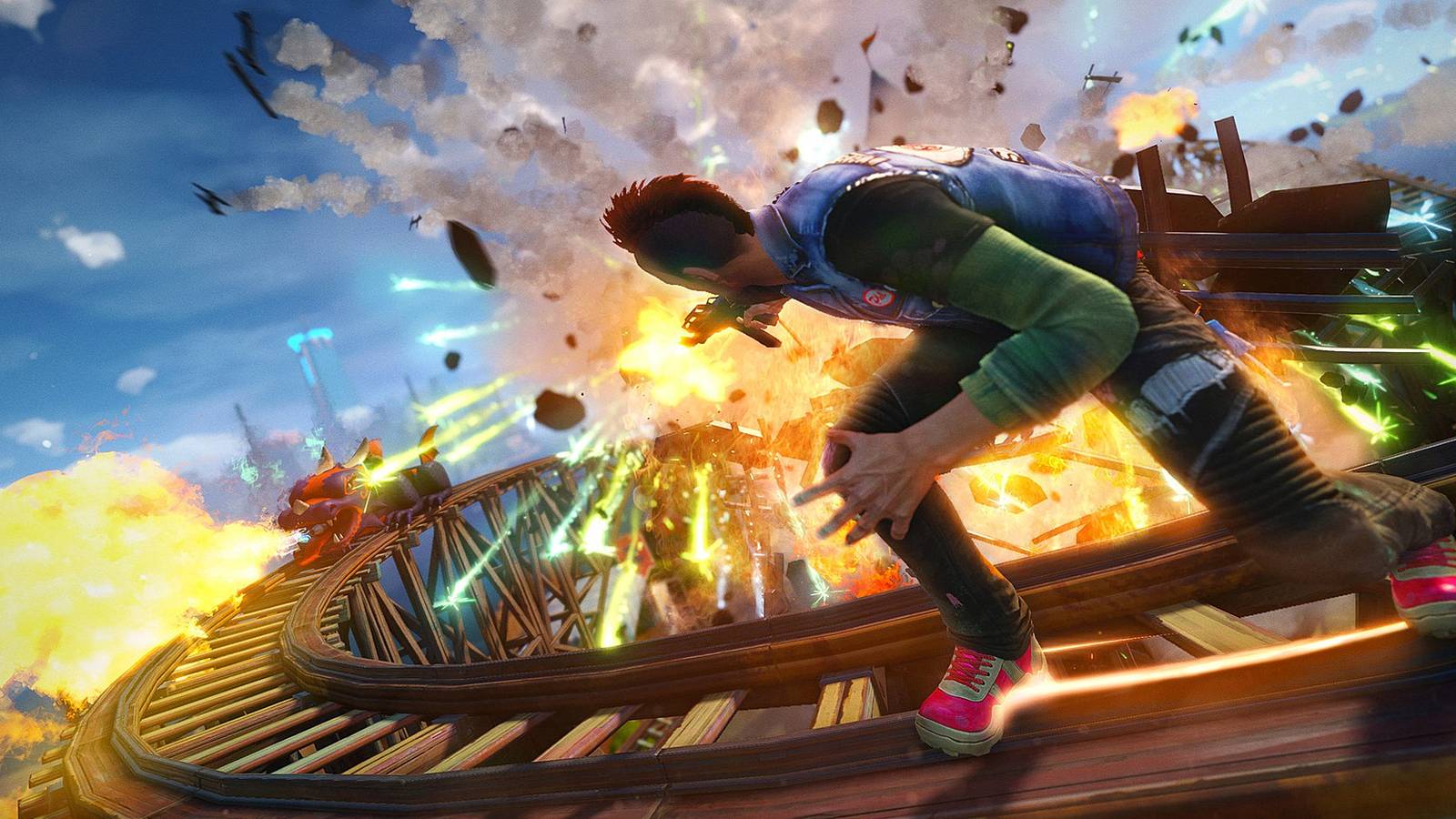
Sunset Overdrive
Insomniac’s Hidden Gem
For how popular Insomniac Games is today with their recent Spider-Man and Ratchet and Clank games, it’s almost inexplicable how little attention is given to Sunset Overdrive. Sure, it may not be a recognizable franchise, but it’s a fantastic game, showcasing the exceptional traversal mechanics that Insomniac iterated on for Spider-Man and the weird weaponry that Ratchet and Clank is famous for.

How Sunset Overdrive May Have Foreshadowed Marvel’s Spider-Man’s Doctor Octopus
Way back in 2014, Sunset Overdrive may have foreshadowed which villain Insomniac would feature as a major Marvel’s Spider-Man antagonist.
One factor may be that Sunset Overdrive was an Xbox One exclusive, which limited its wider appeal, but now that Game Pass is on PC, it’s the kind of game more people need to check out. The story isn’t anything revolutionary, but it’s the kind of off-beat action comedy vibe that made games like Hi-Fi Rush and Saints Row sing. With its fantastic high-speed movement and combat, the game’s lack of popularity is one of the biggest head-scratchers of the previous console generation.
The Saboteur
Killing Nazis In Black And White
It’s a shame that Pandemic Studios wasn’t around in the modern era of gaming, where developer auteurism is more prevalent. The studio behind Destroy All Humans!, Mercenaries, and Star Wars: Battlefront would have been riding a massive word-of-mouth high heading into the release of The Saboteur. Instead, the studio was shuttered by EA just two weeks before the game’s launch, effectively guaranteeing that it would never receive the attention it deserved.
“Deserve” is indeed the right word, because The Saboteur is awesome. It’s an open-world game set in Nazi-occupied Paris where players control Sean Devlin, an Irish race car driver who is roped into a resistance effort after losing a race to a cheating SS driver. It’s primarily a stealth game, but there are lots of shooting, driving, and parkour opportunities to engage with as well. The standout feature is the district liberation mechanic. Every district Sean liberates from Nazi control will go from black-and-white to full color. These kinds of games simply aren’t made anymore, and while The Saboteur may have been one of the last of its kind, it sent Pandemic Studios out on a high note.
Far Cry Primal
Prehistoric Perfection
Far Cry Primal is definitely a weird entry in the Far Cry franchise. Even Far Cry 2, the de facto outlier in the now-iconic FPS series, sticks closer to the formula than Far Cry Primal does. The thing is, that doesn’t make it a bad game at all; it’s just one of those games that didn’t seem to know who it was appealing to. It certainly wasn’t Far Cry fans, but it also didn’t really do anything to draw in first-person action fans, or even Skyrim fans, who may have been eager to give it a try if the “Far Cry” header weren’t stapled to it.
Far Cry Primal is a prehistoric open-world action survival game. Players control Takkar, a hunter who seeks to rise through the ranks and become the leader of his tribe. Due to its setting, guns are replaced with spears and clubs, although the series’ typical bow and arrow remains. The main mechanic that differentiates it from the standard Far Cry experience is Takkar’s ability to tame animals. Once tamed, these prehistoric predators — from sabertooth tigers to mammoths — can then be summoned into battle. It’s not exactly surprising that Far Cry Primal wasn’t a hit, but it’s definitely a game that deserves more love than it gets.
Rage 2
A Vibrant Post-Apocalypse
Similarly, it’s not all that surprising that Rage 2 wasn’t a hit, as the first Rage wasn’t really a hit either. Both games were developed by id Software, a developer with an untouchable pedigree in the first-person shooter space, and that alone put these games on many people’s radar. However, with series like Fallout dominating the post-apocalyptic FPS niche, Rage struggled to find a dedicated audience. Rage 2 did a lot to try and change that trend, but it never quite got there.
One of the major changes made was infusing an abundance of color. Rage 2 absolutely leaps off the screen, with purples, oranges, and yellows filling in where the first game’s muted browns struggled to stand out. It also took more of a power fantasy approach. Nanotrite powers, which were more like skills in the first game, are treated like combat boosters in Rage 2. They make guns do more damage and passively heal players, allowing them to forgo self-preservation entirely and charge right into the fray to pull off cool action movie-like stunts. It’s no masterpiece, but it’s also a damn shame that Rage 2 has all but vanished from the open-world FPS conversation when it has so much fun to offer.
Ghostwire: Tokyo
Don’t Sleep On The Spellwork
Tango Gameworks, Shinji Mikami’s startup studio following his departure from Capcom, dabbled in all kinds of interesting genres. They stuck to their roots with The Evil Within, but then dipped into open-world horror with The Evil Within 2. Then they went fully open world with Ghostwire: Tokyo, an action-horror FPS that emphasizes psychic abilities over guns or melee weapons. Players use these abilites to defeat ghosts and spirits throughout an open-world Tokyo.

Ghostwire: Tokyo and Forspoken Show How a Doctor Strange Game Could Handle Combat
A Doctor Strange game could work well with elements from other recent or upcoming magic-based games such as Ghostwire: Tokyo and Forspoken.
Combat isn’t anything groundbreaking, but it is certainly unique, especially with its use of the PS5’s DualSense controller. Exploring the world is breathtaking, and the story and characters are all tightly written. Enemy design is great (which is nothing new for Tango) and the mix of stealth and action — and how the game flows between the two — keeps things fresh throughout. Maybe the best part is the side quests. While the main narrative is interesting, the side quests get weird in a really great way. They’re absolutely some of the most memorable parts of the game.
Kingdoms Of Amalur: Reckoning
A Forgettable Name Hiding Unforgettable Combat
Much like The Saboteur, the creatives behind Kingdoms of Amalur: Reckoning would have brought the project enough word of mouth to get people in the door if it had been released in 2018. With a setting designed by acclaimed fantasy writer R. A. Salvatore and art by Spawn and Venom creator Todd McFarlane, there was a lot of star power behind the scenes of this game. Unfortunately, it was released in February 2012, less than four months after Skyrim, and that era was an open-world RPG graveyard.
Kingdoms of Amalur has plenty to recommend. The combat is exceptional, giving players two weapon types of their choice to invest in, along with skills suited to their class. It’s not easy, but swapping weapon types on the fly while mixing in skills and dodges stays exciting throughout and provides plenty of room for experimentation. The story and writing are also excellent, set in a unique fantasy world built around reading the Weave of Fate. It’s definitely high fantasy stuff (this is R. A. Salvatore we’re talking about, after all), but with a pleasant comedic lean that does wonders to set it apart. Kingdoms of Amalur: Re-Reckoning is the game’s modern remaster, and it’s perfect for anyone seeking an open-world RPG that actively tries to change things up.
Gravity Rush 2
The Weight Of The World
Directed by Keiichiro Toyama, the mind behind the Silent Hill series, Gravity Rush 2 is a bigger and better sequel to an already stellar first game. Set in the sprawling city of Jirga Para Lhao, players control Kat, the same amnesiac from the first game, as she ventures to a new universe to bring aid, heroics, and good humor to the citizens there.
The same gravity powers return from the first game, but they are complemented by two new variations: Lunar, a high-speed version complete with higher jumps, and Jupiter, a heavier style that increases Kat’s attack damage. While the setting is not as imaginative as the vertical city of Hekseville in the first game, the new movement styles and deeper narrative more than make up for it. This entire series is underrated, but Gravity Rush 2 is the better of the two games, and it’s easy to jump in and keep up with the story, even for those who haven’t played the first game.
Batman: Arkham Origins
The Black Sheep Of The Arkhamverse
For how highly people speak of the Batman: Arkham trilogy — those being Batman: Arkham Aslyum, Batman: Arkham City, and Batman: Arkham Knight — the ambivalence towards Batman: Arkham Origins is wild. This game is easily on par with the others in the series, and while it doesn’t outdo any of them, it’s still a worthy addition to the canon.

Rumor: Rocksteady Could Be Working on a Batman Beyond Game
Developer Rocksteady is in the process of developing a brand-new Batman game, one that is rumored to be inspired by Batman Beyond.
Arkham Origins follows a younger Batman during a time when Black Mask comes to Gotham and puts a bounty on the Caped Crusader’s head, inviting the world’s deadliest assassins to spend Christmas Eve hunting him down. The same now-legendary free-flow combat system shows up here, but introduces new gadgets like the Remote Claw, which lets Batman tether two enemies together. Maybe the lack of Kevin Conroy and Mark Hamill as Batman and the Joker, respectively, contributed to Arkham Origins getting the short end of the Arkhamverse stick, but for anyone who misses this series and hasn’t checked out its underappreciated prequel, it’s more than worth a look.
Maneater
There’s Something In The Water
Shark games are just inherently cool, and Maneater revels in that. This is in no way a realistic shark sim. Combat is almost beyond arcadey, as players can send their shark flying out of the water, up onto beaches, or onto the decks of enemy boats to wreak havoc. The shark itself controls like a dream, carving through the water to consume lesser fish before bursting out of the waves to devour unwitting beachgoers.
The best part is that the shark can evolve into a sci-fi monster that almost verges on a kaiju. Electric abilities, poison trails, and more are possible with different “sets” of evolved shark parts. There is a story here about a mother shark getting revenge on the fisherman who killed her babies, but it’s mostly background stuff. The joy is in the madness, tearing through fish and human flesh alike and racking up high scores based on how crazy the kills are.
Shadows Of Doubt
Private Investigating Done A Dozen Ways
As far as investigative immersive sims go, there is simply nothing better than Shadows of Doubt. Its Minecraft-esque visuals are just there to help with the procedural generation of its open world, but that’s where the similarities end. Players control a private detective in an alternate history version of the 1980s. They’ll be assigned to a crime (also randomly generated) and then have to explore the city to find clues, suspects, and eventually, a culprit.
The brilliance of Shadows of Doubt is that any investigative method is on the table. The world is completely open, so any person within it can be interviewed about the crime in question. When a suspect is identified, players can follow them throughout the day to see if they go somewhere suspicious, or they can break into their apartment and dig for clues that way. It’s an incredibly robust system that is consistently engaging because, as soon as one crime is solved, another arises to take its place. Should players finger the wrong suspect, however, the original criminal will keep committing crimes, leaving more evidence to parse through and new suspects to interrogate.

10 Underrated JRPGs That Can Be Called Masterpieces
They may not have the clout of Final Fantasy 7, but these JRPGs are still praiseworthy.
