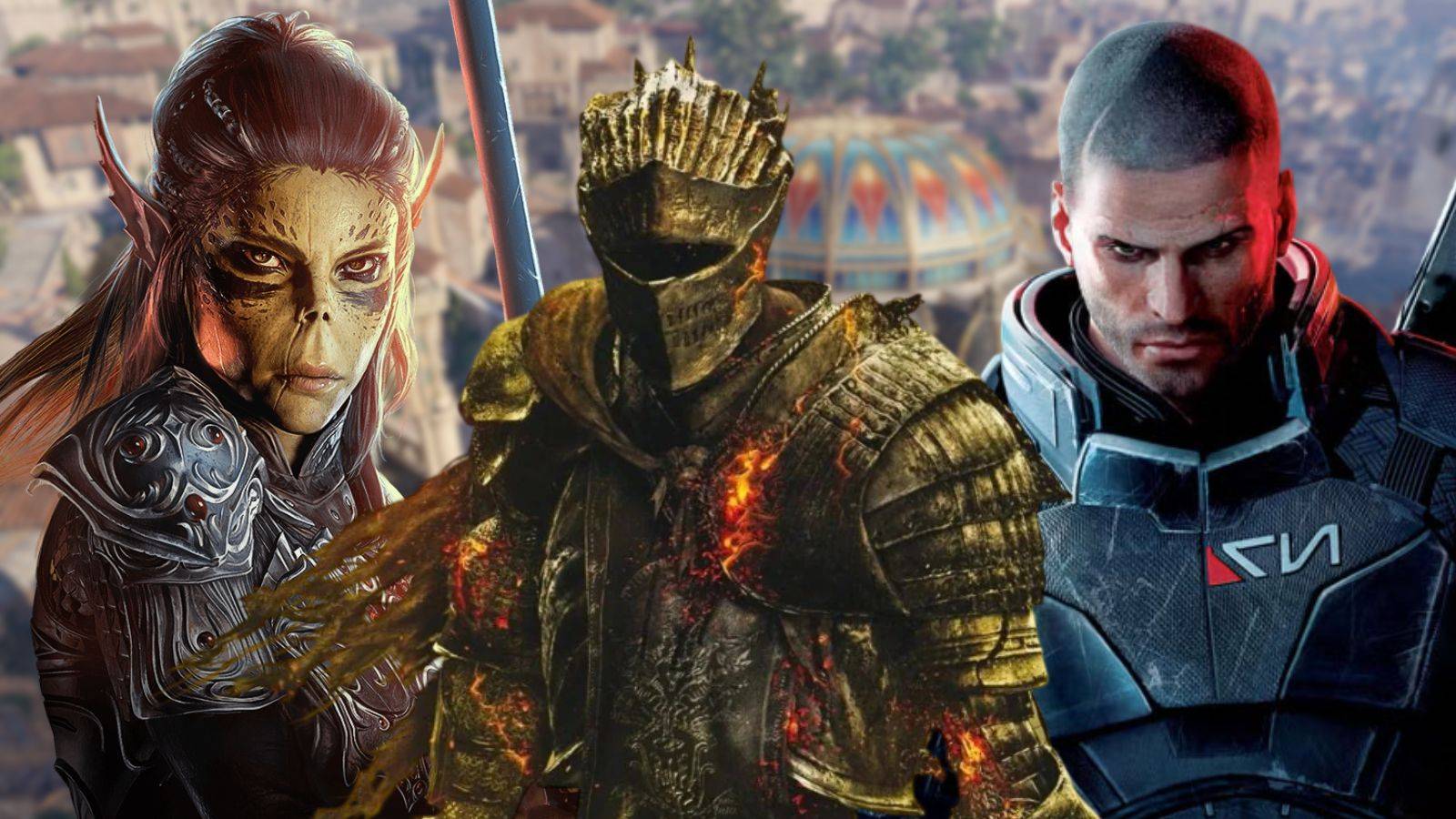
Video game franchises are notorious for their ups and downs in terms of quality. It is pretty hard to start a series off with a banger and keep that level of hype and quality high all the way through another set of games, but despite how difficult it is, there are a few trilogies within the RPG world that have managed to hit that mark on the head, and deliver a drawout experience that never once dips in the middle.

The Greatest Fantasy Worlds In RPGs, Ranked
Intricate lore, distinct races, centuries of history, and unmistakable atmosphere make these fantasy worlds truly stand out in the RPG genre.
The stories may be cohesive and engaging throughout each game, the gameplay may be incredible enough to carry the experience, or the world design might be all the series needs to keep players invested across titles. Regardless of the focus or style, these trilogies show that with the right set of design philosophies and a compelling enough universe, a single series can remain truly spectacular from the moment players are introduced to it, all the way until the final credits roll.
Baldur’s Gate
The Gold Standard For CRPGs
Details:
- Party-based storytelling
- The third entry brought a more cinematic presentation to the genre.
Baldur’s Gate as a series has always been a frontrunner in the CRPG world, and with the release of the third mainline installment, the trilogy’s legacy is now firmly cemented in the genre. Built on the foundational Dungeons & Dragons rules, the series focuses on tactical combat, meaningful party interactions, and sprawling questlines that reward curious and attentive players immensely.
Each entry refined the formula without sacrificing any complexity, and all of that progress culminated in the third installment, which brought with it more cinematic moments and even more depth to virtually every system in the game. It is a rare example of a series where each subsequent game is better than the last, and only time will tell if another RPG can come close to the unmatched quality of Baldur’s Gate 3.
Mass Effect
Sci-Fi Action That Sticks The Landing
Details:
- Continuity across games
- Memorable relationship arcs
The Mass Effect trilogy follows Commander Shepard’s fight against the Reapers across three interconnected games in an epic saga that still remains one of the best of its kind. Individual player choices carried forward, shaping character relationships and galactic politics in tangible ways, and those changes gave the game a much more personal feel that is rare in the modern gaming landscape.
The first game started the series with a bang, the sequel perfected squad loyalty missions, and the third escalated the stakes to full-scale war. Despite debates about its ending, the trilogy managed to maintain cohesion and consistent character development throughout, sustaining its momentum in a way that very few other games in the genre have ever come close to.
Dark Souls
Pionering An Entire Genre
Details:
- Popularized the soulslike genre
- Exceptional tie-ins between all three games
Dark Souls brought the soulslike genre into the mainstream, showing players around the world that punishing gameplay and ambiguous worlds could be just as, if not more, compelling than more streamlined experiences. Initially, the focus centered around the challenge and lack of direction, and those things remained constant throughout the series and even in the rest of the FromSoftware catalog.
Many people fell in love with the series right from the start, while others have gone back to revisit the classics after experiencing the epic, cinematic battles seen in the final entry. It is fair to say that DS2 has its issues, but despite the criticism, it remains a stellar RPG that can stand alongside its soulslike brothers even after all these years.
The Witcher
A True Gaming Titan
Details:
- Character story arcs are always central
- Evolving combat systems
The Witcher trilogy charted Geralt of Rivia’s journey from modest beginnings to global acclaim. The original game introduced players to a world of grey morality, while The Witcher 2 sharpened its attention towards political arcs and a more robust combat system that gave players more control over how encounters played out.

RPGs Where Role-Playing Matters More Than Stats
Good stats are nice, but the real deal is in the big choices and dialogue options in these RPGs that emphasize role-play.
The Witcher 3 elevated the series to biblical heights, taking the existing formula and turning it into one of the most celebrated RPGs ever made. Across all three entries, characters and the world around them remained at the heart of the experience, and despite having aged slightly, the earlier titles are still well-worth revisiting to this day.
Dragon Age
Epic Ambition Matched With Epic Execution
Details:
- Rich companion dynamics
- Expanding political stakes
The original Dragon Age trilogy set out to deliver a series of varied yet interconnected tales set in the fantasy world of Thedas. Origins emphasized tactical combat and introduced many iconic origin stories, and the second game continued several character narratives, branching out even further and polishing some of the rougher edges.
Inquisition expanded the scope dramatically, extending the conflict to a much larger scale, whilst also introducing bigger areas to explore and discover. There’s a reason the third installment won Game of the Year, as it took the blueprint laid by the first two and really ran away with it, and if players are worried about the earlier games’ age, they can rest assured that the gameplay and stories hold up surprisingly well, especially compared to other RPGs at the time.
Xenoblade Chronicles
Grand Worlds Without Compromise
Details:
- Large open areas
- Recurring philosophical themes
The Xenoblade Chronicles trilogy treated players to a far more philosophical narrative than many other RPGs that sent them to several massive landscapes, each with its own unique identity and set of characters. With new games come new areas and protagonists, but the core gameplay systems remained intact throughout, being centered around synergies and positioning in the middle of the fight.

Upcoming Role-Playing Games People Are Excited For
While plenty of RPGs have been announced for 2026 and beyond, these upcoming role-playing games are especially exciting.
Themes of fate, identity, and coexistence carried through all three games, lending them an incredibly mature tone that allowed them to stand out in the space. Coupled with a stellar soundtrack and a cohesive, well-written story, the series was able to continue moving forward with each entry adding meaning to the narrative, rather than being iterative additions.
Dragon Quest (Erdrick Trilogy)
A Legendary RPG Saga
Details:
- Classic turn-based systems
- Persistent genre influence
The Erdrick Trilogy of Dragon Quest 1, 2, and 3 laid the foundations for many JRPG design principles that are still being employed to this day. Simple turn-based combat and a clear heroic journey for players to follow, it was difficult not to be immediately hooked and want to see more game after game.
Dragon Quest 3, chronologically first in the saga, tied the trilogy together with surprising narrative cohesion, and because of that consistency, the trilogy was able to go from a straightforward RPG series into a worldwide phenomenon that is now regarded as a timeless classic by virtually everyone.
Xenosaga
Lore Density On Another Level
Details:
- Complex narrative themes
- Character-focused drama
The Xenosaga trilogy leaned heavily into its complex science fiction storytelling, bringing in some pretty heavy themes that were explored in-depth over the course of the entire series. A lot of its identity is defined by the cinematic cutscenes, which continued to get better and better over time, though many of the original’s set pieces still look pretty great.
The sequels refined the combat pacing and cleaned up some of the original clunkiness, but Shion’s story remained the focal point right up until the end. Rather than abandoning the complexity, the later entries doubled down on the interconnected plot threads and character arcs, and by the finale, many of those longer narrative threads eventually paid off in dramatic fashion, closing things out just as well as they began.
Shadow Hearts
Dark Fantasy With Mechanical Flair
Details:
- Judgement ring timing system
- Strong narrative cohesion
The Shadow Hearts trilogy carved out a unique identity through its gothic horror aesthetics and its inventive Judgment Ring combat system that was considered well-ahead of the curve at the time. Set in an alternate-history version of the early 20th century, the series blended supernatural threats with real-world locations and events, with the gameplay focusing on timing-based combat mechanics that ensured every battle remained engaging rather than repetitive.
What truly binds the trilogy is its tonal consistency. From the tragic journey of Yuri Hyuga to the more adventurous yet still melancholic sequel arcs, the franchise never abandoned its innovative design approach or dark thematic core, even after expanding the story and raising the stakes with each subsequent game.
Trails in the Sky
A Rare Slow-Burn That Paid Off
Details:
- Interconnected world-building
- Gradual character development
The Trails in the Sky trilogy is the perfect example of slow, deliberate pacing done right. The story begins modestly with Estelle and Joshua’s coming-of-age journey as junior bracers, and the first chapter focuses heavily on world-building, introducing political tensions and regional conflicts that quietly foreshadow far larger conspiracies that wouldn’t be explored until much later.
By the second and third chapters, those threads converge into high-stakes revelations that feel fully earned rather than shoe-horned in for the sake of it. Throughout the whole series, the character development remains its greatest strength, with relationships evolving naturally over dozens of hours, building towards an emotional payoff that closed things off in a respectful and satisfying manner.

6 Best Open-World RPGs With Deep Progression, Ranked
Players of every stripe will be satisfied by the depth of character and gear progression in these massive open-world action RPGs.
