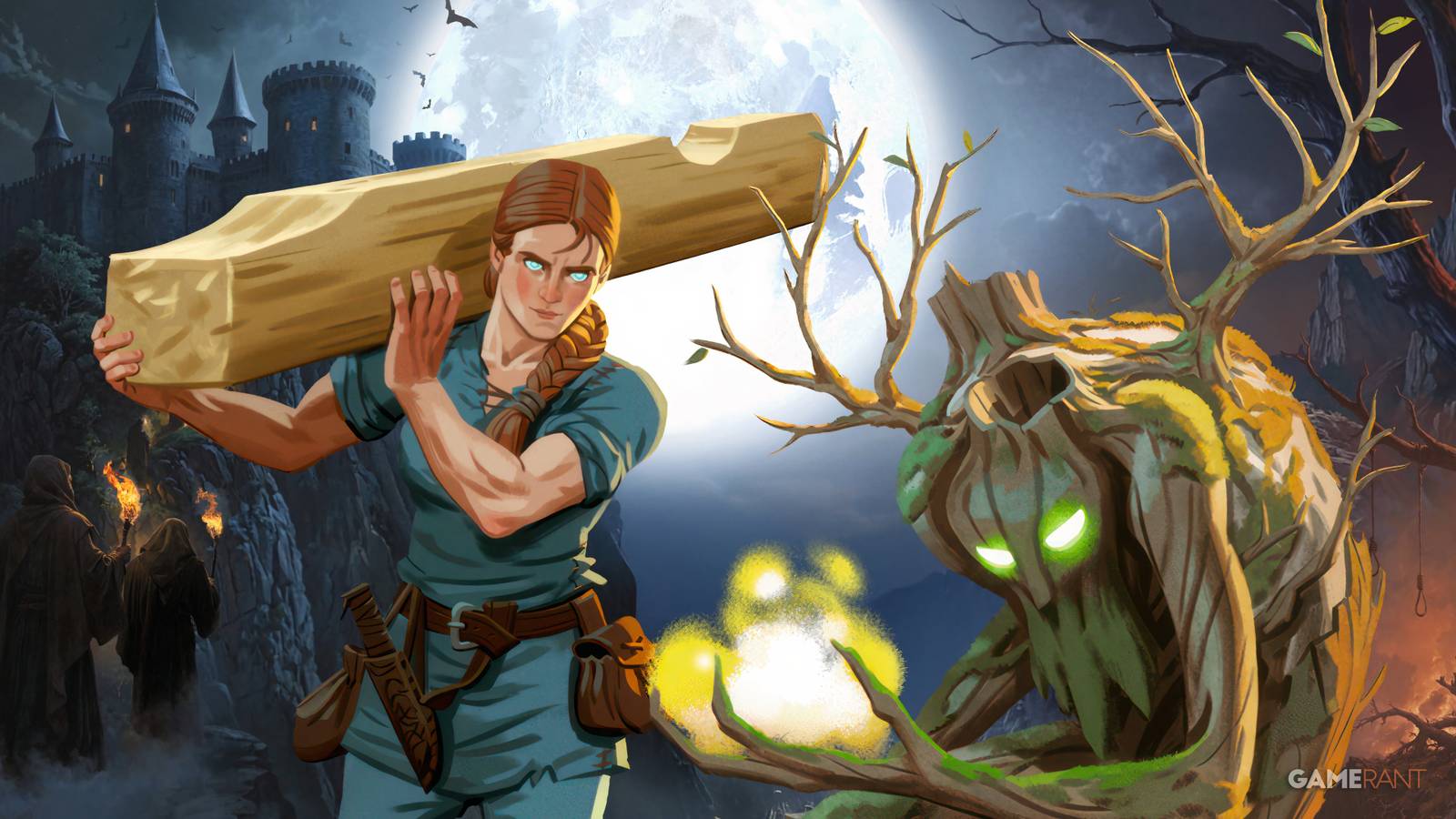
From early access launch in 2021 Valheim has become one of the most influential survival games in recent times. Its blend of brutal exploration, co-op gameplay, and atmospheric world-building helped redefine what players expect from open-world survival sandboxes. Even years before early access, Valheim is still evolving and serves as a blueprint for games that want to balance freedom, danger, and exploration.
Now, the upcoming vampire survival game seems poised to build on that foundation in a very different direction. Vampires: Bloodlord Risingwhich will launch in Steam Early Access on January 30, 2026, will take a lot Valheim's most compelling concepts and recontextualizes them through a gothic fantasy lens that puts narrative, power, and identity at the heart of the experience: open-world exploration, base building, and cooperative progression.
Where Valheim asks players to prove themselves to the Norse pantheon through survival, Vampires: Bloodlord Rising it asks a more intimate question: what kind of ruler will you become when the night is yours?
Vampires: Bloodlord Rising Features at a glance
- A huge, gothic open world set in the cursed land of Sangavia – a setting that will feel familiar D&D fans moody Barovia
- Castle building as a basic progression system, not just as a shelter
- Vampire-specific survival mechanicsincluding blood feeding and evolution
- Distinct vampiric formssuch as Aristocrat and Hunter, depending on your avatar's needs
- Thrall and Servant Systems for production, hunting and defense
- Skill-based combat against people, animals and the Inquisition
- Single game or co-op for 4 playerswith shared or different options

A shared love of open worlds – but with very different souls Will you rule from a palace of terror or become the master your people need?
at first sight Bloodlord Rising and Valheim share known DNA. Both plunge the player into hostile, mysterious open worlds where survival depends on preparation, exploration and clever maneuvering. IN Valheimplayers traverse procedurally generated biomes inspired by Norse mythology, each with distinct enemies, resources and bosses that are gateways to progress. Discovery is constant and danger is always near.

Bloodlord Rising it mirrors this sense of scale, but its open world Sangavia feels more deliberate. Rather than procedural biomes, the land is steeped in a gothic atmosphere. Mist-shrouded areas, ancient ruins, and territories unlocked by saturating the Castle Core (your home base) with blood. Exploration isn't just about finding better resources; it's about regaining lost power and uncovering the history of a fallen vampire realm.
The living take note of your every move in Bloodlord Rising
Where ValheimThe game's biomes challenge the player with environmental hostility, including storms, cold and monsters, Bloodlord Rising adds ideological resistance. As your power grows, so does the opposition. An entity known as The Inquisition actively pursues you, turning exploration into a constant push and pull between expansion and retaliation. Both games reward curiosity, but Bloodlord Rising explores exploration as an act of conquest rather than survival itself.
Castle building as identity, power and story
One of the most impressive ways Bloodlord Rising differs from Valheim how it handles base construction. In Valheim, the construction of longhouses and villages provides security, storage, and production progress—a necessary refuge from the wild. It is functional, flexible and deeply satisfying. IN Bloodlord Risingyour castle is something more intimate. It's not just a base. It is a physical manifestation of your authority over your tenants.
As a game with a customizable home base, Bloodlord Rising gives “home” a more morbid feel. At the heart of your fortress is the Castle Core, a living engine fueled by blood. Feeding it unlocks new regions, powers, and systems, and ties territorial expansion directly to vampiric hunger. Castle design goes beyond utility, encouraging players to shape high halls, secret chambers, and gothic towers that reflect how they choose to rule.

This design philosophy extends into the game's social systems. NPC villagers aren't just avatars you trade with or pass by. They are potential prey, servants or slaves. Loyal followers can be assigned to craft, hunt, build or defend, turning your castle into a living ecosystem. Progress becomes less about surviving the world and more about bending it to your will. But not only that, you have to be careful about what kind of vampire lord you become in order to achieve the perfect balance.
Combined with the game's branching skill trees and multiple vampiric forms, Bloodlord Rising it positions player choice as both mechanical and narrative. Power is worth something, and legacy is something you actively shape.
Valheim showed what survival could be. Vampires: Bloodlord Rising asks who you are becoming
Valheim it remains a landmark in the game of survival because it understands restraint. His systems are deep but readable, his world harsh but fair. Bloodlord Rising does not seek to replace this formula. Instead, it builds upon it by adding purpose, character, and moral weight.
Mixing ValheimAn open-ended exploration and co-op survival game with a story-driven vampire fantasy, Bloodlord Rising it offers something familiar yet different. It's a game of dominance as much as persistence, of building not only shelter but also identity.
For players who love Valheima sense of discovery and a desire for a darker, more narrative experience, Bloodlord Rising can be one of the most interesting survival games to watch out for.
