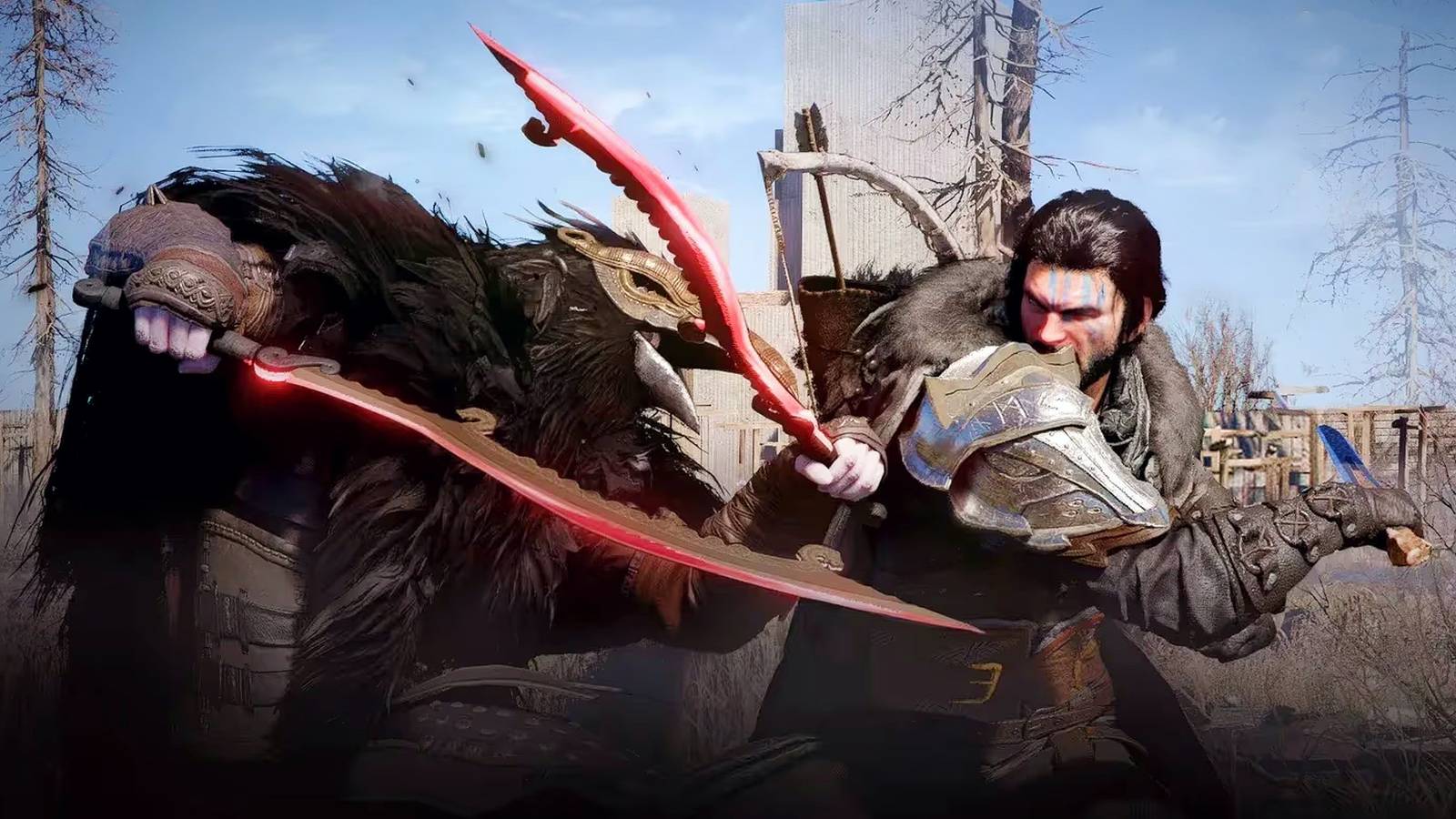
Crimson Desert is an open-world game unlike any other, which helps the project to set itself apart from other big titles in the genre and win over the players despite some of its shortcomings. Pearl Abyss’s game has a list of features that is truly gigantic, which is already quite amusing, given how polished and bug-free the overall experience mostly is. Every player can approach Crimson Desert in their own way, carving their own path through Pywel and prioritizing things they enjoy the most.

Crimson Desert: Things I Only Learned After Playing For 50 Hours
It’s no secret that Crimson Desert has a truly massive list of features, and some might take time to fully grasp and start using regularly.
Combat is a major part of the game, and yet another aspect that Crimson Desert does very differently from other open-world games, ignoring most modern trends and infusing the battle component with numerous ideas of its own. Once players grasp the basics, fighting in Crimson Desert can be a lot of fun and, in some ways, feel more satisfying than elsewhere, bolstered by the game’s rich sandbox mechanics and plenty of ways to experiment with gear, abilities, and the environment. Let’s take a look at how Crimson Desert redefines open-world combat for the successors to draw from, but also highlight aspects that the game unfortunately does worse than its competitors, ending up needlessly frustrating.
Redefines: Armies of Enemies to Face
Most Battles Involve Dozens of Active Enemies Attacking All at Once
From the get-go, Crimson Desert makes it clear: players will face literal hordes of enemies in massive, chaotic, large-scale battles. There are very few small bandit camps to clear that have around 10 enemies total, like the ones that the majority of open-world games typically offer. Instead, players will clear massive areas crawling with enemies, facing dozens of them at all times, attacking all at once, screaming, shooting, or running away, panicking — almost like in the Dynasty Warriors titles.
Moreover, combat encounters in Crimson Desert are somewhat separate activities, as players would rarely encounter roaming groups of enemies simply wandering in the world. More often, after some preparation, players will go into a specific area that requires liberation, and such camps can easily take 30 to 60 minutes to fully clear. The sense of scale and power that Crimson Desert entrusts to players here is so rare in the genre that it alone sets the title apart.
Redefines: Physics-Based Destruction
Using Physics, Destructions, Grabs, Throws, and Collisions Never Gets Old
What adds to the excitement is physics-based destruction and environmental collisions that players can use to their benefit. Almost everything around you can be destroyed, including buildings and watchtowers. There are also explosive barrels everywhere that can be detonated for some serious damage. As a result, players have been sharing their own tactics for clearing camps non-stop since Crimson Desert’s launch, and some are as creative as they are amusing.

5 Things Crimson Desert Does Better Than The Witcher 3
In many ways, Crimson Desert is the opposite of The Witcher 3. Here’s a list of things the new game does much better than the acclaimed masterpiece.
Objects, as well as the enemies, can be grabbed and thrown, using heights as an advantage. Some advanced melee attacks can send numerous enemies flying around the player, clashing into other enemies behind them, and knocking them to the ground as well. The chaotic, purely sandbox-based nature of Crimson Desert combat can stay fresh and exciting for hours on end, as very few games can match its unique strengths.
Redefines: Stackable Perks on Weapons for OP Results
Nothing Prevents the Players from Making Any Weapon Incredibly Powerful
To make the most out of the combat system, Crimson Desert players have plenty of flexibility when it comes to tuning their gear. Weapon or armor isn’t as important on its own, serving mostly as shells for Abyss Gear, which are socketed items that come with dozens of unique passive or active bonuses. From the standard damage, defense, attack speed, or critical, to much more exotic skills triggered in combat, Crimson Desert offers a great variety for customization.
Probably the best thing about the Abyss Gear system is how few restrictions there are currently in the game. Players can stack passive and active bonuses as they want, unlocking truly devastating combinations. For instance, numerous active skills triggered by the same button can be stacked onto a single weapon, unleashing up to five different skills at the same time for spectacular crowd control in the game’s large-scale battles.
Redefines: New Skills Can Be Learned From Enemies
Simply Observe Bosses and Use Their Signature Moves Against Them
When it comes to new combat skills, attacks, and moves, players have access to a relatively standard skill tree, acquiring skills they need by investing Abyss Artifacts (one skill can cost more than a single Artifact). However, it’s yet another example of how Crimson Desert offers its own spin to the familiar system.

What Crimson Desert Loses in Story It Makes Up for in World-Building
Crimson Desert’s story may get lost in itself, but its world makes that easy to ignore when simply stepping outside leads somewhere unexpected.
Players may not purchase certain unlockable skills and attacks by themselves, but rather learn them directly from enemies or bosses that use these moves in combat. Once observed, the skill becomes unlocked for the rest of the game, and can be used against their very own teacher to defeat them here and now. As a result, players who get an understanding of this system may invest heavily only in basic stats like Stamina or Health, unlocking combat skills for free simply by playing the game and facing new enemies and bosses over time.
Redefines: Three Distinct Playable Characters
Kliff, Damiane, and Oongka Each Comes With Their Set of Skills and Preferable Weapons
Oh, did I say there’s a skill tree in Crimson Desert? Well, there are several, actually, as the game features three distinct playable characters. Not everyone will unlock them, though, given how many hours players need to pour into the game first to unlock Damiane and Oongka in Crimson Desert. Not to mention that there are certain restrictions for additional characters that make them less appealing to play and level up, instead of Kliff.
Granted, Crimson Desert isn’t the only open-world action-adventure to offer several playable characters. For instance, in Assassin’s Creed Shadows, players can switch between Naoe and Yasuke, also coming with their own set of skills and various weapons. Yet it’s still a pretty uncommon feat in the open-world genre, and even if Crimson Desert’s realization isn’t the best, there’s a potential to switch one’s playstyle dramatically later in the game, and it’s all up to players.
Redefines: Mounts to Use in Combat
From Wolves and Bears to Dragons and Even ATAG Mech Suits
In many open-world games, players get access to mounts (usually just a horse) as a way for faster traversal and, at times, even horseback combat. Once again, Crimson Desert pushes the boundaries significantly when it comes to mounts. There are dozens of exotic mounts in the game beyond various horses, including such unique variants as Silver Fang wolf, enormous White Bear, or Rock Tusk Warthog. Unlike horses, these mounts can actually aid in combat, attacking enemies on their own.

I’m Already Mourning Vanilla Crimson Desert
Crimson Desert is already improving in all the right ways, but in doing so, it may be losing something that made its earliest hours so unforgettable.
On top of that, in the late game, players can unlock the All-Terrain Armored Gear (ATAG), a futuristic armed mech suit, extremely powerful and useful in combat, as well as Blackstar Dragon to ride and take into full-fledged sieges, causing massive havoc. These features are as exciting as they are rare in the modern open-world genre, further adding points to Crimson Desert for its willingness to go beyond expectations.
Now that the ways Crimson Desert redefines open-world combat have been covered, let’s take a look at the ways it doesn’t, covering the game’s weaker spots when it comes to combat.
Doesn’t: Boss Fights Are Not Good
Most Bosses in Crimson Desert Range From Underwhelming to Frustrating
If there’s one thing that Crimson Desert does worse than the majority of open-world action-adventure titles, it’s bosses. Almost every player universally agrees that bosses are currently one of the weakest elements of the entire game, poorly designed and balanced, often relying on some gimmicks like a single move or ability such as Axiom Force, and often coming with devastating one-kill moves (I’m looking at you, Antumbra Sword) that players will have a hard time avoiding. To make things worse, at times, bosses can teleport and be supported by countless minions, as players struggle with controls and terrible camera lock-on. As such, rarely does the victory feel like something you’ve earned, but rather sheer luck and an endurance test based on the number of healing items you carry.
To be fair, not all bosses in Crimson Desert are bad, and some are more than decent and actually fun to fight, with spectacular cutscenes, multiple phases, and stunning battle arenas. Yet for every great boss, Crimson Desert offers several tedious, incredibly frustrating, and unbalanced bosses that are annoying and painful to face, resulting only in a sigh of relief when the battle is finally over. Perhaps the upcoming difficulty levels that are already in the works can solve some issues.
Doesn’t: Combat Flow Is Surprisingly Simplistic
There Are Little Moves or Combos to Master Beyond Button-Mashing
With all the combat and gear flexibility, Crimson Desert’s overall combat flow is pretty basic, falling short of some other open-world games. To perform a light or heavy combo, players simply have to hold down a single button; in most scenarios, that will be enough to secure a victory. Essentially, it all boils down to the Abyss Gear perks that players equip to their gear rather than some skill-based combo trick that requires their own growth.

Crimson Desert is the Definition of “Not for Everyone”
Crimson Desert has been one of the most anticipated launches of 2026, but it’s already clear that the game is an acquired taste.
With not as many dedicated moves or unique combos that you can unlock, it’s easy to see players mastering just a couple of reliable attacks and sticking with them for the majority of the game, only switching their Abyss Gear for something new and more powerful. Parrying, blocking, and dodging also aren’t the biggest strengths of Crimson Desert, and while it’s possible to play cool against some humanoid bosses, for the most part, players are expected to simply “tank” the incoming damage with healing items.
Doesn’t: Abyss Artifacts for Everything
Shared Resources for Weapons and Skills Upgrade Isn’t the Best Idea
Like in many cases, Crimson Desert offers its own take on familiar systems, but not always with universally better results. Skill and weapon upgrades are one such thing, both relying on a single resource: Abyss Artifacts. While these are not too rare in Pywel, each one requires some work first (completing a puzzle, defeating optional bosses, or doing challenges), so players would hardly spend them without a second thought. This creates unnecessary tension about choosing whether to invest another artifact in a new skill or increase the stats of your primary weapon or armor.
Nothing criminal, of course, but it’s hard to see how this system makes sense at all, and what exactly it brings to the table. With numerous playable characters to invest skills and plenty of unique gear available, it’s easy to see that most players completely ignore some vital aspects of Crimson Desert to prioritize what they’ll use more often. Such an idea needlessly harms the game’s flexibility, requiring players to either stick to only one character (most already stick with Kliff) or constantly respec skill points between each character.

Crimson Desert
- Released
-
March 19, 2026
- ESRB
-
Mature 17+ / Blood, Drug Reference, Intense Violence, Strong Language
- Developer(s)
-
Pearl Abyss
- Publisher(s)
-
Pearl Abyss
