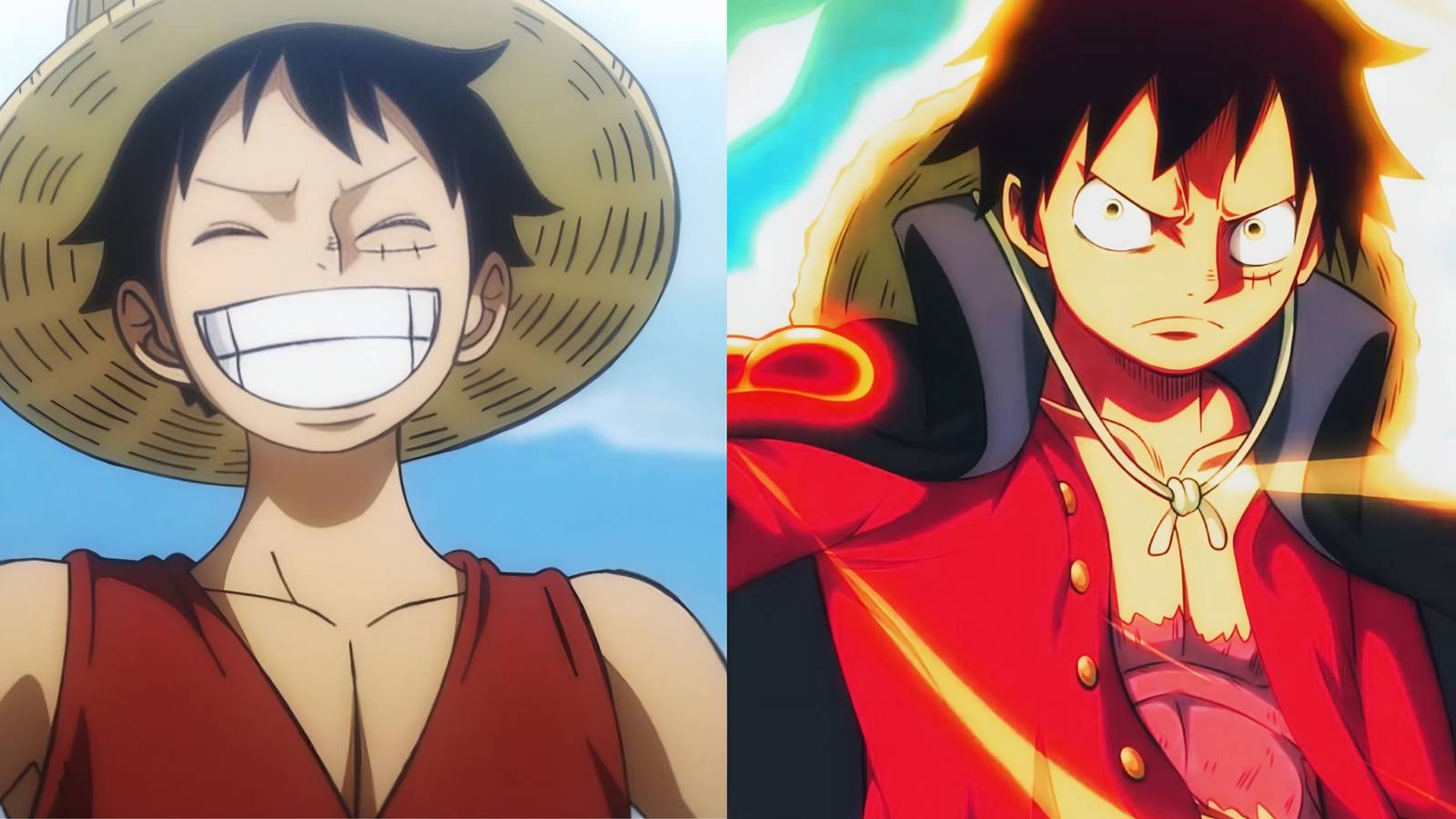
This post contains spoilers for One Piece.
One piece is the thrilling journey of Monkey D. Luffy as he tries to obtain One Piece and become the Pirate King. Created by Eiichiro Oda, the series is truly in a league of its own, both in terms of popularity and quality. Since its inception, One piece the manga has sold 600 million copies, making it the best-selling manga of all time. In comparison, Dragon Ball is in second place with just 260 million, which means it's 340 million copies behind. In terms of storytelling and world building, One Piece is unparalleled. Eiichiro Oda's ingenuity makes every arc of One Piece special.

One Piece: Oda confirms new time jump after Elbaf arc
Elbaf is the main arc and after its end One Piece gets a new short timeskip.
The One Piece manga is divided into two halves – pre-timeskip and post-timeskip. It takes place after the events of the Marineford War. Meanwhile, the pre-timeskip covers Luffy's adventures in East Blue until the Summit War, where he loses Ace. Both halves are incredibly important to the story, but there is often debate as to which is better.
The meaning of the Pre-Timeskip in one piece

As mentioned, the pre-timeskip starts from the very first chapters and ends with the return of the Straw Hat Pirates to the Sabaody Archipelago. The pre-timeskip included several sagas, and they are:
-
Eastern Blue Saga
-
Alabasta saga
-
Sky Island Saga
-
Water 7 saga
-
Thriller Bark Saga
-
Summit War Saga
Sagas are longer and consist of several arcs. The pre-timeskip sagas are essential to the story as they introduce the audience to both the protagonists and villains. They also reveal the backstories of most of the Straw Hats, adding depth to their character.
Click or tap the games that match the category
Start
The pre-timeskip half of One Piece also features arguably the most exciting war in the entire story, aka the Summit War, which was fought between the Whitebeard Pirates and the Marines. The Whitebeard Pirates tried to save Ace from certain death while the Marines and Shichibukai tried to make sure the pirate's execution went smoothly. Plus, there were some juicy tidbits about characters like Gol D. Roger, Shanks, and Kaido.
Why One Piece Post-Timeskip is better
Post-Timeskip is on another level

One could write essays about the pre-timeskip quality being better than anything Oda wrote in the post-timeskip, but that wouldn't be objectively correct. Post-timeskip basically, Oda takes things to a whole new level, both story-wise and action-wise, and the quality of the arcs proves it. In the post-timeskip, Oda wrote the following arcs:
-
Return to Sabaody Arc
-
Fish-Man Island Arc
-
Punk Hazard Arc
-
Dressrosa Arc
-
Zou Arc
-
The entire Cake Island Arc
-
Levels Arc
-
Wano Country Arc
-
Egghead Arc
-
Elbaph Arch
The post-timeskip half of One Piece contains some of the biggest revelations in the entire series. In the Egghead and Elbaf arcs, fans learned the truth about the God Valley incident and what really happened to Bartholomew Kuma. They also learned about the existence of characters like Imu, Shamrock, Garling, Shakuyaku and Harald. If you read the post-timeskip arcs closely, it's easy to see the difference in quality.
Post-Timeskip is the highlight of the piece
Post-Timeskip has much better stories

It is quite clear that the post-timeskip is the zenith of Odo's writing. All the things hinted at in the first half of the story are finally connected to their proper endings, and that too without any retcons, which is a huge achievement. Many authors before Oda had attempted something similar but failed.
Oda also introduced the post-timeskip end-game villains to fight the Straw Pirates. The heroes already met the Five Elders in the Egghead arc, who tried to prevent them from leaving the island in one piece. The helplessness of the Straw Hats in the arc probably showed Oda that the crew is still not ready to face the biggest challenges. It's also worth mentioning that the post-timeskip will end the story of One Piece, which means fans will finally learn the truth about One Piece, the Void Century, Imu's identity, and many other things. These revelations alone are enough to place the post-timeskip above the pre-timeskip.
Currently, Oda is working on the Elbaf arc, which focuses on the land of giants. In the Oda arc, he not only introduced the Holy Knights, the world government's most loyal lapdogs, but also showcased the power of characters such as legendary characters like Roger, Garp, and Davy D. Xebec.

One piece
- Release date
-
October 20, 1999
- Network
-
Fuji TV
- directors
-
Hiroaki Miyamoto, Konosuke Uda, Junji Shimizu, Satoshi Itō, Munehisa Sakai, Katsumi Tokoro, Yutaka Nakajima, Yoshihiro Ueda, Kenichi Takeshita, Yoko Ikeda, Ryota Nakamura, Hiroyuki Kakudou, Takahiro Imayomura, Yashiôhiro Mayuū Shishido, Hidehiko Kadota, Sumio Watanabe, Harume Kosaka, Yasuhiro Tanabe, Yukihiko Nakao, Keisuke Onishi, Junichi Fujise, Hiroyuki Satou
- Writers
-
Jin Tanaka, Akiko Inoue, Junki Takegami, Shinzo Fujita, Shouji Yonemura, Yoshiyuki Suga, Atsuhiro Tomioka, Hirohiko Uesaka, Michiru Shimada, Isao Murayama, Takuya Masumoto, Yoichi Takahashi, Momoka Toyoda
-

Mayumi Tanaka
Monkey D. Luffy (voice)
-
Kazuya Nakai
Roronoa Zoro (voice)
