Just when I thought Hideaki Anno had finally tied a neat little bow on all things Neon Genesis Evangelion, the cult psychological mecha anime pulled me back in. It remains one of the biggest franchises on the planet, continuing to make millions each year through merchandising and licensing partnerships, so I guess I shouldn't be too surprised.
But the last thing I expected to be announced during the 30th anniversary celebrations this month — aside from a short film confirming that Shinji Ikari will end up with Soryu Langley's Asuka in either the original or Rebuild timeline — was that a new anime series was in the works. It's also not directed by Hideaki Anno, with the original creator making good on his promise to grow the series into something that could be expanded upon with exciting new interpretations far beyond his own.
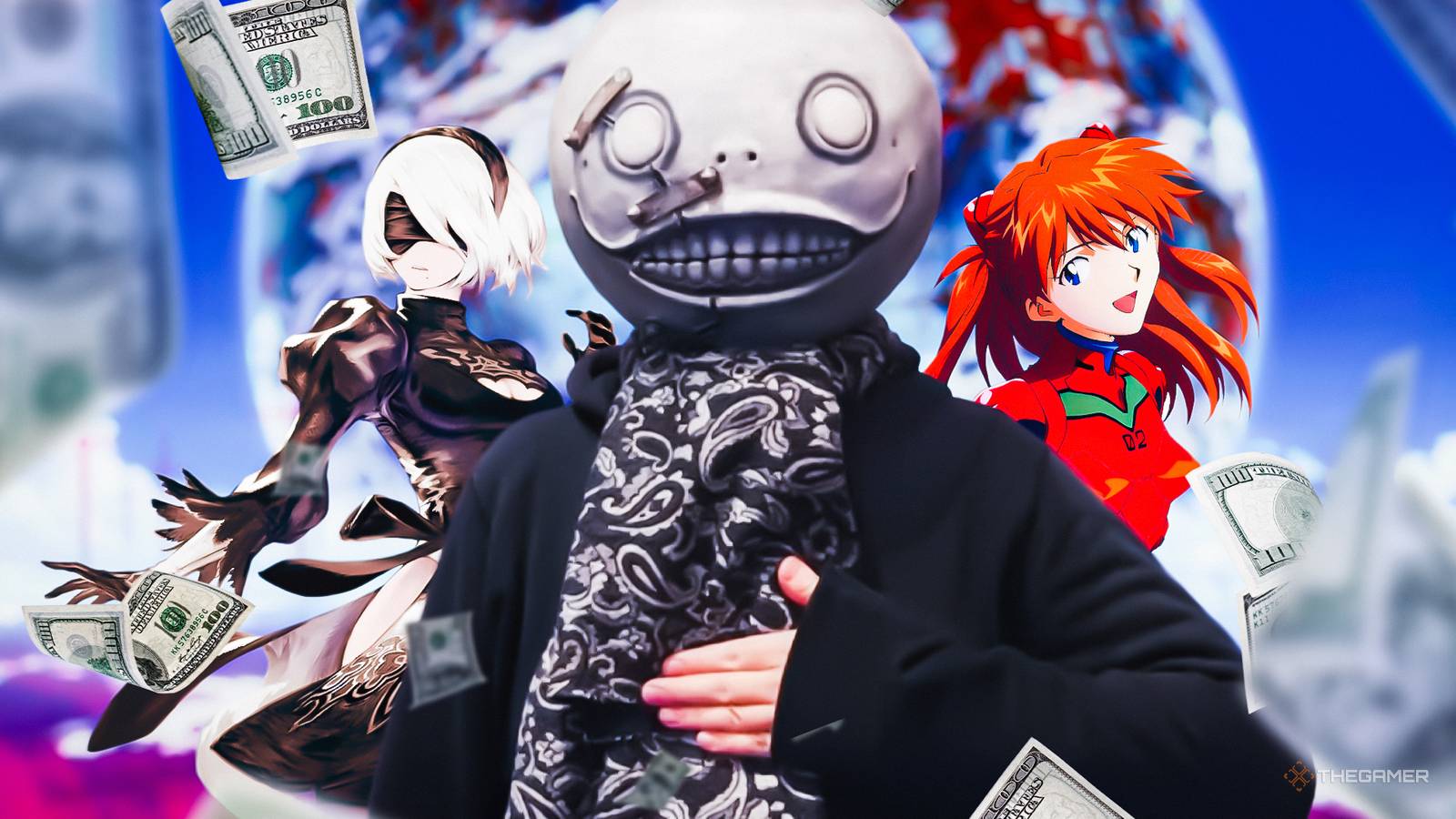
Instead, Nier: Automata and Drakengard creative director Yoko Taro will take up the mantle and write the story in this universe with frequent collaborator Keichii Okabe working on the music. Rebuild's Kazuya Tsurumaki and Toko Yatabe return to direct, while Anno's Studio Khara and Cloverworks help co-produce the wild new series. What exactly this is and whether it will work as a sequel to either the original series or the existing films is unclear. But what I do know is that I am incredibly excited.
What is the new anime series Neon Genesis Evangelion about?
The announcement confirmed that it would be an entirely new series, but given how steeped in lore and convolutions Neon Genesis Evangelion tends to be, I'd take that phrase with a generous grain of salt. A teaser released shortly after offers more concrete ground for speculation as to what exactly we might be dealing with.
First, it sounds like classic Yoko Taro and Keiichi Okabe. The ethereal yet haunting chorus is accompanied by rousing strings that unsettle as much as they inspire, while Japanese, which unfortunately I can't properly translate, spills across the screen. The visuals depict a ruined orchestra in the middle of a ruined pit filled with water (perhaps a concert hall?) long after the world around it has been left to rot. This leads me to wonder if this project will take place after the original series or the Rebuild movies, or at least a version of Eva's world that has already been ravaged by doom.

My eyes are immediately drawn to instruments associated with key characters, such as the piano that Kaworu Nagisa often played in the Rebuild movies before Shinji forced him to kill him, the cello that Shinji only played during the OG series. The fact that this crumbling wooden framed instrument acts as the opening shot and is left on for a few seconds feels intentional as it stands tall in comparison to all the other instruments when the sun shines on it. They have to represent Shinji, or at least the troubled protagonist form, and the fact that they are supposed to appear in this new series.
The piano being totally destroyed and submerged in water, while Shinji's cello stands tall and with only minimal wear, also feels intentionally symbolic.
But the final series of shots, which showcase the new form of EVA Unit 01, are the most striking. It's more animal than machine again as its purple maw opens to reveal a mouth full of sharp, hungry teeth. He is shrouded in shadow as a strange vapor emerges from his lips, a twisted being both organic and mechanical. Evangelion once again offers flashy yet concise visuals that draw us in without giving anything away.

Considering how the last Rebuild movie ends with Shinji Ikari saying goodbye to all the Evangelions and creating a new world where he and his fellow pilots can finally live normal lives, it almost certainly has to take place in some form of new or alternate universe if he's not going to undo that conclusion.
And I would hate for that to happen because I felt that Hideaki Anno had finally reached a place of personal and creative growth to let these characters go and have the happy ending they always deserved despite everything.
It brought me to tears a few years ago because of how final it was, a gentle kiss on the forehead for these characters after they've been through hell. I understand that capitalism dictates Neon Genesis Evangelion continues in new forms, but it needs to be done for the right reasons. And it turns out that Yoko Taro is one of the few creators to whom I would entrust such a task.
Why Yoko Taro could be the perfect person to bring back Evangelion
-4.jpg?q=49&fit=crop&w=500&dpr=2)
Taro's work has always been heavily influenced by the work of Hideaki Anno and especially Neon Genesis Evangelion. He's one of the few auteur directors in video games willing to deliver truly harrowing and contemplative stories that ask huge questions about the nuanced nature of humanity, our world, and our place in it.
Games like Drakengard or Nier: Automata are uncompromisingly beautiful experiences, but they also aren't afraid to make players feel uncomfortable or ask them to look far beyond the art itself and consider the bigger picture. How our own world has become twistedly obsessed with conflict and lacking in empathy when it often proves to be the most powerful tool we have.
Moments in Nier: Automata and Drakengard closely mirror parts of End of Evangelion, such as an alien being emerging in the middle of Tokyo at the end of Drakengard's secret ending to destroy humanity and usher in the events of the original Nier. Or 2B chokes a hugely corrupt version of 9S to death during the final moments of the Automata's initial ending, before revealing that the two share a human bond that can't be discarded, even if the world around them offers so little to fight against.

Considering the Evangelion influence that so obviously permeates his work, if Taro's past work is anything to go by, I can trust him to carry this universe into the unknown future. He is the one who gives voice and purpose to new and existing characters, even as he dares to change resolutions that once seemed absolute.
At the end of the day, the narrative has to mean something, whether it expands on the philosophical ideas at the core of Evangelion or dares to tell new stories that reflect our own world. There are so many moving parts to this property that I'm both intimately familiar with and blissfully naïve about, and I want to see Taro get his hands on them all.

Neon Genesis Evangelion is one of the most beloved stories in modern Japanese history, and its global impact cannot be understated. Even three decades after its debut, it is one of the most influential mediums of the modern era, whether animated or otherwise, so that does not prevent it from living on in some form.
But like all great works that attract a universal level of recognition, there is an opportunity for them to be remixed and reimagined by generations of new creators. Hideaki Anno seems to have given his blessing, and that's all I can ask for. If you need me, I'll get in the damn robot.

Neon Genesis Evangelion
-

Megumi Ogata
Shinji Ikari
-
Megumi Hayashibara
Rei Ayanami
-
Kotono Mitsuishi
Misato Katsuragi
-
Spike Spencer
Ritsuko Akagi
