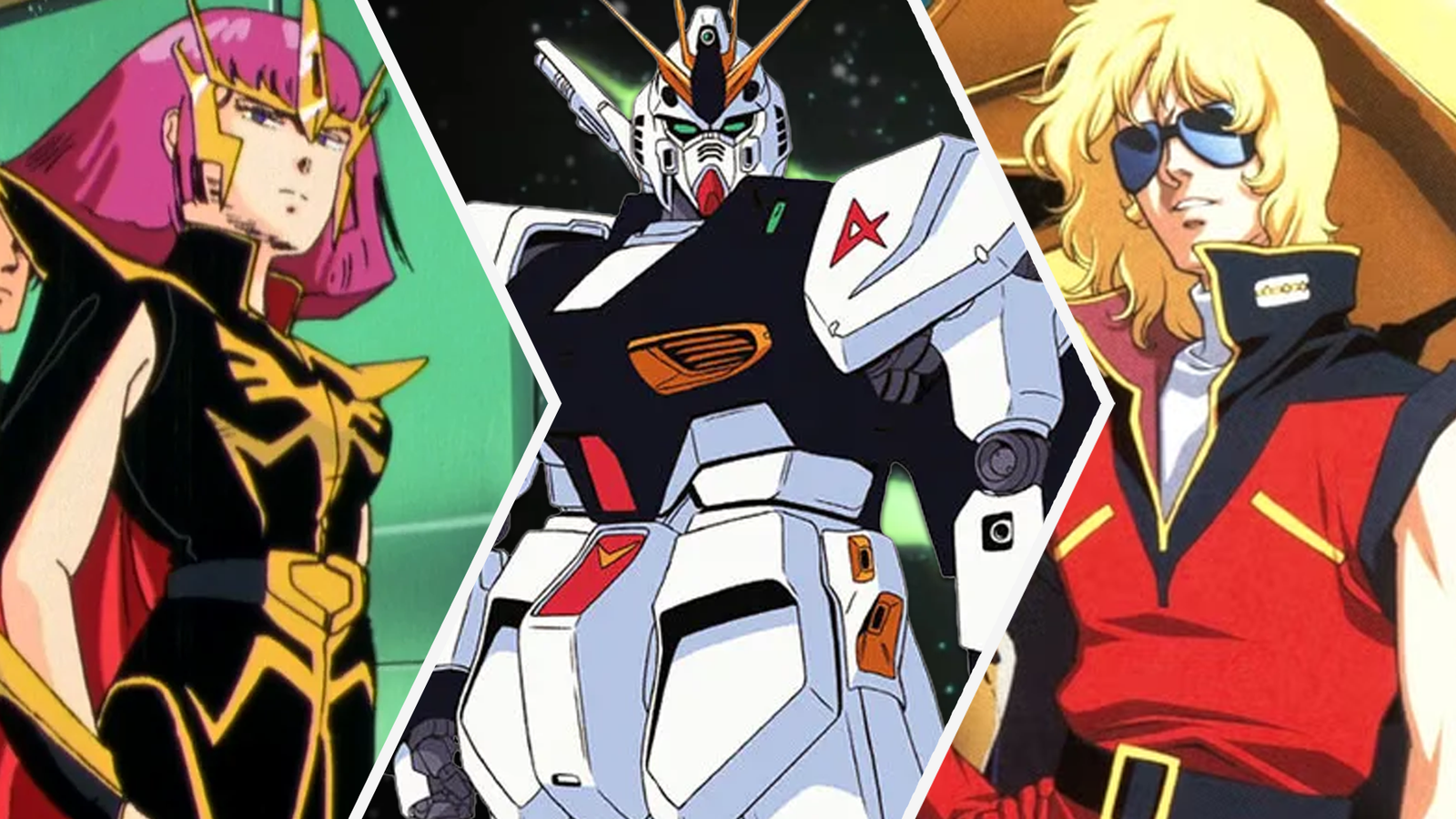
The Universal Century is the timeline that started it all for Mobile Suit Gundam, and the Gundam universe with the most anime series & movies to its name. The UC is packed with a deep history and lore, with each entry in the timeline fleshing out the Federation, Zeon, and the aftermath of the One Year War. Unlike other Gundam AUs, the UC can be depressing at times, especially the deeper you get into the timeline.
Yoshiyuki Tomino’s original vision for the Gundam franchise is one where war never ends, and humanity will always find a way to hurt one another. Even at its darkest, though, the UC is filled with some of the best series and movies not only in the Gundam franchise, but in the anime medium. Gundam would be nothing without the Universal Century, and there’s a reason Sunrise keeps going back to the blueprint that started it all.
New Gundam Protagonist Merch Celebrates 30 Years of the Alternative Timeline
Fans of Gundam Wing, G Gundam, or Gundam X won’t want to miss their chance to get some snazzy new merch featuring their favorite characters.
10
Victory Gundam Was Created at the Peak of Tomino’s Depression

Mobile Suit Victory Gundam was created at the height of Yoshiyuki Tomino’s most depressed phase, and it really shows artistically. Victory Gundam is an extremely bleak and violent anime, that wants the viewer to walk away understanding that humanity cannot change and war is painfully cyclical. The series often feels hopeless at times, rendering most of the UC before it almost pointless. No matter what happens, humanity will always be scarred by the Federation and Zeon’s sins.
At the same time, Victory is still home to everything that makes a Gundam anime worth watching. Uso is a fantastic main character, Katejina is an even better villain, and – while very bleak – the way the story plays with motifs and themes established in earlier entries (like motherhood and the way children are affected most by war) is genuinely handled quite well. Characters drop like flies to the point of feeling like shock value, and the tone can get real weird at times, but Victory is a worthy entry to the UC.

Mobile Suit Victory Gundam
- Release Date
-
1979 – 1980
- Network
-
Nagoya TV
- Directors
-
Yoshiyuki Tomino, Ryoji Fujiwara, Shinya Sadamitsu
- Writers
-
Kenichi Matsuzaki
-

Hirotaka Suzuoki
Gihren Zabi (voice)
-
Tôru Furuya
Degwin Sodo Zabi (voice)
-
Toshio Furukawa
M’Quve (voice)
-
Kiyonobu Suzuki
Hayato Kobayashi (voice)
9
Gundam ZZ Doesn’t Deserve the Hate
Mobile Suit Gundam ZZ might be the most controversial anime in the series, even more so than Victory. The direct sequel to Zeta Gundam, Gundam ZZ makes a bad first impression. Zeta ended on a dark note, only for ZZ to open up with roughly 12 episodes of slapstick comedy that feels painfully out of place tonally. Fortunately, the story picks up considerably after the Moon-Moon two-parter, especially once Ple enters the picture.
The back half of Gundam ZZ is just as good – if not even better, at times – than Zeta Gundam. The episodes set on Earth are one of the best stretches in Gundam history. Judau’s character arc is great, offering a fresh change of pace and perspective from Amuro and Kamille. Haman is likewise one of the best antagonists in the entire series. Complete with fantastic art direction and animation, Gundam ZZ is absolutely worth watching – just temper expectations for the first-third of the series.

Mobile Suit Gundam ZZ
- Release Date
-
1986 – 1987-00-00
- Network
-
tv asahi, Nagoya TV, HTB, Kyushu Asahi Broadcasting, Niigata Television Network 21, khb, KFB, TSB, Shizuoka Kenmin TV, HOME, KSB, Kagoshima Broadcasting
- Directors
-
Yoshiyuki Tomino
- Writers
-
Hidemi Kamata
-
-
Hirotaka Suzuoki
Bright Noa
-
Masami Kikuchi
Iino Abbav
-
8
Unicorn is a Love Letter to the UC
Mobile Suit Gundam Unicorn is one of the best mecha anime ever made – especially if you watch the seven-episode OVA instead of the recut series that chops up the pacing. Every episode of Unicorn is at least one-hour, feeling like a mini-movie with a clear thematic through-line and superb art direction. Unicorn might very well be the single-best animated and directed series in the entire franchise. Every character moves like a real human being, backgrounds are fully lived in, and the action is spectacular on a level that hasn’t been topped since.
Gundam: 8 Most Talented Pilots, Ranked
Not every fighter can handle Gundam battles, but these talented pilots dominate battlefields effortlessly.
Unicorn also boasts a great story that serves as a proper sequel to both Gundam ZZ and Char’s Counterattack, building off major themes that defined the UC. Banagher and Full Frontal’s rivalry feels like the second coming of Amuro and Char, without coming off painfully derivative. Marida is similarly a perfect extension of Ple’s character arc in ZZ, right down to the tragedy that defines her. Unicorn‘s ending is divisive, to say the least, but at its core, the anticlimax behind Laplace’s Box sets up the rest of the UC’s dark future and offers a bleak layer to the entire narrative.

Mobile Suit Gundam Unicorn
- Release Date
-
2010 – 2014-00-00
-
Koki Uchiyama
Banagher Links
-
Daisuke Namikawa
Riddhe Marcenas
-
Rikiya Koyama
Flaste Schole
-
Hiroki Touchi
Daguza Mackle
7
Hathaway’s Flash is a Brilliant Start to the Hathaway Trilogy
If the Hathaway trilogy can stick the landing, the sub-series will go down as the greatest thing to happen to the Gundam franchise since the original UC trilogy. Hathaway’s Flash takes place 12 years after the end of Char’s Counterattack, examining the political ramifications of Char’s failed rebellion, and the Federation’s growing fascism on Earth. The first movie in the saga, Hathaway’s Flash plays out more like a spy-thriller and character drama than a typical Gundam anime, and it’s all the better for it.
The dynamic between Hathaway, Gigi, and Kenneth is nothing short of masterfully written, resulting in some of the best conversations and character arcs in the Gundam franchise. Hathaway being torn between his terrorism as Mafty, and growing Newtype relationship with Gigi, makes for a great source of drama, while quietly examining his trauma from CCA. On a production level, Hathaway’s Flash looks and sounds amazing, and the movie’s pace makes the action scenes hit all the harder. The only possible downside is that fully appreciating Hathaway’s Flash requires you to watch the first three UC anime and Char’s Counterattack – but that’s hardly a bad thing in practice.

Mobile Suit Gundam: Hathaway
- Release Date
-
June 11, 2021
- Runtime
-
95 Minutes
- Director
-
Hidekazu Hara, Kô Matsuo, Shuko Murase, Mitsuhiro Yoneda, Sankaku
- Writers
-
Yoshiyuki Tomino, Yasuyuki Muto, Hajime Yatate
-
Kensho Ono
Hathaway Noa (voice)
-
Reina Ueda
Gigi Andalucia (voice)
-
Junichi Suwabe
Kenneth Sleg (voice)
-
Soma Saito
Lane Aim (voice)
6
Sorcery of Nymph Circe is the Best Movie of 2026
Mobile Suit Gundam Hathaway: The Sorcery of Nymph Circe is absolutely phenomenal. Picking up where Hathaway’s Flash left off, The Sorcery of Nymph Circe explores Hathaway’s deteriorating mental state, how his terrorism is reshaping both himself and the Earth, and the burden he carries as a Newtype. The Sorcery of Nymph Circe dives even deeper into Gigi as a character, presenting her as a clear foil to Hathaway, both characters fueled by their traumatic pasts.
On a production level, Mobile Suit Gundam Hathaway: The Sorcery of Nymph Circe is nothing short of amazing. The art direction, animation, sound design, and pacing make for one of the greatest anime films of all time. The highlight of the movie is the final battle, where Hathaway hallucinates Amuro, turning what would otherwise be a (very well animated) Gundam battle into an ideological war between Amuro’s complacency in CCA and Hathaway’s desire to change the world by whatever means necessary.

Mobile Suit Gundam Hathaway: The Sorcery of Nymph Circe
- Release Date
-
May 15, 2026
- Runtime
-
108 minutes
- Director
-
Shuko Murase
- Writers
-
Yoshiyuki Tomino, Yasuyuki Muto
Cast
-
Kensho Ono
Hathaway Noa (voice)
-
Reina Ueda
Gigi Andalucia (voice)
-
Junichi Suwabe
Kenneth Sleg (voice)
-
Soma Saito
Lane Aim (voice)
5
Char’s Counterattack is a Perfect Ending to the Original UC Trilogy
Char’s Counterattack is a perfect conclusion to the original Mobile Suit Gundam anime trilogy. After being absent from Gundam ZZ, Amuro and Char return for their final showdown, as Char does everything he can to connect with Amuro one final time. CCA often gets some criticism for its new characters, but Hathaway, Gyunei, and Quess are ultimately subversive takes on Amuro, Char, and Lalah respectively, showing what these characters would look like under a different context.
Rearrange the covers into the correct Japanese release order.
Rearrange the covers into the correct Japanese release order.
Easy (5)Medium (7)Hard (10)
Char’s Counterattack does admittedly feel like the second act of an anime that never existed, but this is partially the point and adds to the film’s genius. The movie subtlety builds off of where Zeta left Amuro and Quattro off, while using the foundation Haman’s second Zeon movement in ZZ as a jumping off point. Musically, artistically, and thematically, Char’s Counterattack is the sort of genius only Tomino could pull off. Bonus points for featuring some of the best action and Mobile Suits in the UC, as well.

Mobile Suit Gundam: Char’s Counterattack
- Release Date
-
March 12, 1988
- Runtime
-
119 minutes
- Director
-
Yoshiyuki Tomino
- Writers
-
Yoshiyuki Tomino
-
Toru Furuya
Amuro Ray (voice)
-
Shuichi Ikeda
Char Aznable (voice)
-
Fuyumi Shiraishi
Mirai Yashima (voice)
-
Hirotaka Suzuoki
Bright Noa (voice)
4
Gundam 0079 Still Holds Up
The original Mobile Suit Gundam is often treated as an outdated commodity that’s easily replaced with its recap movie trilogy or the Origin manga, but this could not be further from the truth. Gundam 0079 is still an absolute masterpiece to this day, and a must-watch anime for anyone who cares about sci-fi, mecha, or even just television as an artistic medium. 0079 does have its monster of the week elements, but behind every single episode is a slow-burning story about the horrors of war and the effect it has on children.
The character development, art direction, and sheer creativity on display in the original Mobile Suit Gundam is downright enviable. The series has aged gracefully decades later. Amuro and Char are still some of the best anime characters ever written, and the rest of White Base’s core group gets a surprising amount of development, turning just about everybody in the cast into a three-dimensional and nuanced being. Even if the animation isn’t always great, the direction and cinematography makes every episode pop, especially during the series’ endgame. Come for the Mobile Suit action, stay because 0079 is Gundam at its best.

Mobile Suit Gundam
- Release Date
-
1979 – 1980
- Network
-
Nagoya TV
- Directors
-
Yoshiyuki Tomino, Ryoji Fujiwara, Shinya Sadamitsu
- Writers
-
Kenichi Matsuzaki
-
Hirotaka Suzuoki
Gihren Zabi (voice)
-
Tôru Furuya
Degwin Sodo Zabi (voice)
-
Toshio Furukawa
M’Quve (voice)
-
Kiyonobu Suzuki
Hayato Kobayashi (voice)
3
Zeta Gundam is the Best Anime Sequel Ever Made
Mobile Suit Zeta Gundam was the first sequel in the franchise, and set an amazing precedent that’s frankly been hard to top even decades later. Zeta Gundam is a darker, harsher, and significantly sadder take on the Gundam universe, showing that war is cyclical, heroes lose their fire, and even villains can try (and fail) to redeem themselves. Watching the Federation become the villains by becoming the Titans is deeply uncomfortable, and painfully real.
Kamille is a very different protagonist than Amuro, but a perfect lead whose character development and ideals ultimately make for a more interesting story. Doubly so for Char, who now hides his identity as Quattro Bajeena, and often feels at war with himself and his new duties. Zeta‘s action, animation, music, and mech design are flawless, all culiminating in one of the greatest – and most depressing – finales in anime history.
2
Honorable Mention: Turn A Gundam is the Ending the UC Deserves
Turn A Gundam technically takes place in the Correct Century, but the important thing to note about Turn A is that the series is a sequel to every single Gundam anime up to that point. Near the end of Turn A, it’s revealed that some variation of every Gundam series has happened, including the entirety of the Universal Century. Thematically, Turn A finally gives the UC a happy ending that breaks humanity’s never-ending cycle of violence – and this time, it feels like it’ll stick.
Even beyond giving the UC a hopeful ending, Turn A is just an amazing anime from top to bottom. Loran is a fantastic protagonist who really sticks out from previous Gundam pilots, using the Turn A Gundam to help people as much as possible, rather than just as a tool of destruction. The stellar soundtrack, top-notch character development & writing, and excellent animation easily elevate Turn A Gundam over most of the franchise.
1
War in the Pocket is a Masterpiece

Created in celebration of the franchise’s 10-year anniversary, War in the Pocket was both the Gundam series’ first OVA, and the first Gundam anime not directed by Yoshiyuki Tomino. Despite this, War in the Pocket perfectly understands the themes Tomino was working with, telling a small-scale story about the loss of innocence and how the real victims of war are the children. At only six episodes, War in the Pocket moves at an excellent pace, each episode gradually building to Bernie’s final confrontation with Christina.
War in the Pocket manages to do a lot with its short runtime. Side 6 is one of the most fleshed out, and lived in, settings in the series, and Al’s bond with both Bernie and Christina is masterfully written. Al himself is one of the best Gundam protagonists, despite not being a pilot. His admiration for Zeon mirrors fans who favor the Principality, while his growing friendship with Bernie gives the OVA a beautiful, emotionally charged throughout that makes the final episode hit so much harder. War in the Pocket isn’t just a great Gundam anime, it’s one of the best miniseries ever made and a masterpiece in every respect – story, animation, art direction, and sound design.
