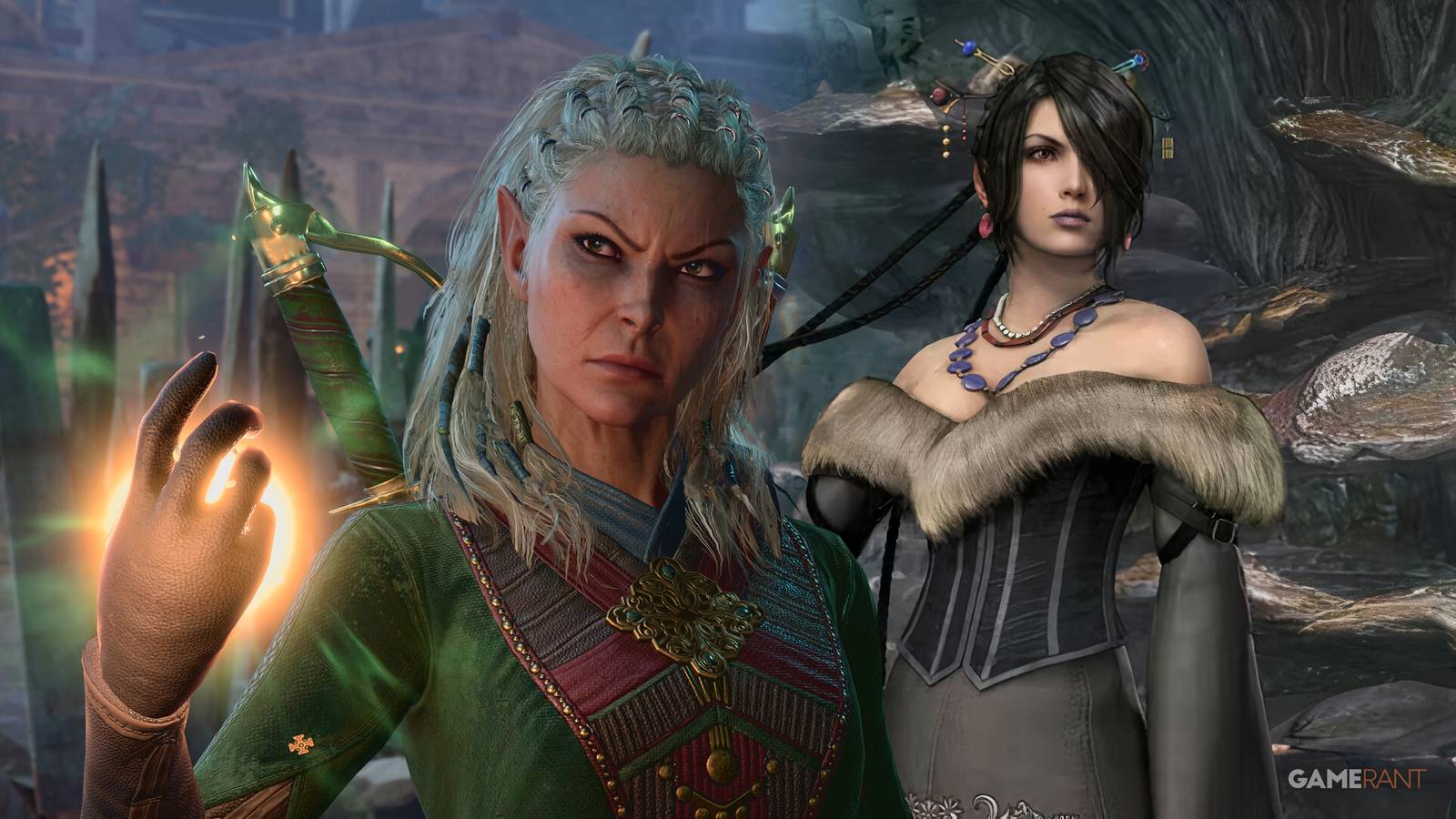
in many ways RPG sides are understood by what each character brings to the table in combat. There's healer, tank, mage, rogue, damage dealer, and whatever other role a particular game needs to fill. At the same time, RPG parties still focus on characters rather than the combat roles they are made up of, each offering a distinct personality that can either help or hinder the group. These personalities include comedians, philosophers, pragmatists, and anti-heroes, and whether they are included depends on the story and RPG protagonist. However, time has shown that every great RPG needs a matriarch, as they tend to suffer without one.
Characters like Jaheira Baldur's Gate 3Lulu in Final Fantasy 10and Wynne in Dragon Age: Origins to show what can happen to a group of individuals when someone brings experience, stability, comfort and authority in a way that no one else can. They are not there to soften the group, but to strengthen it. RPG parties are built like families, and a strong matriarch can be the difference between a group that feels like a list of useful companions and one that feels like a group of people who actually need each other.

Steam's new party-based tactical RPG is a simpler Baldur's Gate 3…with dinosaurs
Fans of fantasy RPGs who also love dinosaurs may have the perfect game to check out, as this new indie on Steam has both.
RPG parties are where families are found, and every family needs someone to hold it together
Historically, RPG parties tend to consist of people who have very little reason to travel together unless the world around them collapses. One character might be running from their past, another might be chasing a cause, another might be loyal to a kingdom or faction, and another might simply be there because they had nowhere to go. As chaotic as this sounds, it's actually part of the genre's appeal. RPGs are at their best when they bring unlikely people together and let their differences create an emotional payoff that makes the journey memorable.
Who is that character?

Identify the silhouettes before time runs out.
Start
Identify the silhouettes before time runs out.
Easy (7.5s) Medium (5.0s) Hard (2.5s) Permadeath (2.5s)
But the longer the RPG goes on, the more opportunities these differences will have to collide, and the more the group will need someone to hold them together in those moments. This is where the matriarchal dynamic becomes so valuable. It gives the party a kind of inner gravitas, someone whose presence helps the group feel more like a family than a lumped together group of individuals from different walks of life.
However, this does not mean that the matriarch has to be the official leader, the oldest figure, or the one who calls the shots. In many cases, the archetype's strength comes from the fact that it doesn't try to dominate the party at all. He holds it together through experience, constancy, correction, and a willingness to say what others may not want to hear. He's often the character who can spot when youthful bravado turns to recklessness, when confidence slips into arrogance, or when a party mistakes proposal for growth—and that's usually when he speaks up and brings everyone back down to earth.
This is what makes this role so important to party-based RPG storytelling. Found families are held together by people who choose to stay, confront, forgive, protect and challenge each other. The strong matriarch helps make this believable by bringing the kind of presence that can soften the party without weakening it, sharpen it without tearing it apart, and remind everyone that saving the world means very little if the people saving it never learn how to trust each other.
The best RPG Matriarchs lead without stealing the show

The best RPG matriarchs are rarely the main characters, but they wouldn't be who they are if they were front and center. Their power ultimately comes from how they influence the group around them without creating a story about them. They can challenge the protagonist, protect the younger characters, offer hard-earned wisdom, or simply carry enough history to make the rest of the party feel more grounded. In a genre that often requires players to watch heroes grow into themselves over the course of dozens of hours, the matriarch works best by giving that growth something to respond to, rather than replacing it entirely.
Jaheira from Baldur's Gate 3 shows what happens when the Matriarch has a history
Baldur's Gate 3's Jaheira is a great example of a matriarchal character because she doesn't enter the story as someone still trying to figure out who she is. By the time the player meets her, she's already been through several crises, fighting the battles that shaped the Sword Coast, losing people, making mistakes, and carrying responsibilities that most of the group barely understand. So instead of her being there because she needs the main character to give her purpose, she already has her own purpose, history, and scars.

And that history changes what it adds to the party. Jaheira can be sharp, dry and even difficult, but she still brings the perspective of someone who has seen heroism before and knows how expensive it can be. In a cast full of characters still struggling with their identities, loyalties, fears and temptations, Jaheira feels like someone who has already lived through several versions of the journey they're on. Rather than taking over the story to make it matter, its value is in the way the party feels connected to something older and deeper than the immediate crisis before them.
Lulu gives Final Fantasy 10 a protective older sister to the Matriarch
Final Fantasy 10Lulu isn't the most obvious version of an RPG matriarch, but that doesn't make her any less. She's not old, she's not a great party mentor, and she's not trying to lead everyone from some distant place of wisdom. Instead, her matriarchal role comes through her relationship with Yuna and the rest of the group. She's been through enough to understand what Yuna's pilgrimage really means, and because of that, her protection goes beyond simply caring for Yuna. Rather, she is afraid because she knows that the path in front of her is built to take something from Yuna.

This gives Lulu a very specific place Final Fantasy 10party dynamics. Tidus brings confusion and emotional honesty, Wakka brings familiarity and misplaced loyalty, Auron brings mystery and hardened experience, but Lulu brings a kind of protective realism to the group. She understands the traditions of Spira well enough to respect them, but she also knows enough to be burdened by them. It's not her job to stop Yuna from moving forward, even though a part of her might want to. Her role is to walk alongside her, challenge the naivete around her and give the party a stronger emotional anchor. In this way, Lulu becomes a matriarch by carrying her worries, sorrows and responsibilities.
Dragon Age: Origins' Wynne is a classic Matriarch party RPG

Wynne is particularly effective at nurturing without being passive. She's not there to just approve the Warden's choices or quietly patch everyone up after the damage has been done. She has opinions, convictions, regrets and is willing to stand up to what she believes is wrong. This can frustrate her depending on how the player approaches Dragon Age: Originsbut that's also why she feels like a true matriarch instead of a background caretaker. She is compassionate, but not infinitely permissive. He is supportive, but not silent. In a game filled with difficult choices and morally complicated companions, Wynne gives the gang a voice that questions what kind of people they become along the way.
Great RPG Matriarchs will boost the whole party

A great RPG matriarch makes the whole party stronger because she brings something that the rest of the party often lacks. It can be history, wisdom, protection, correction, experience, or simply the ability to see the whole picture when everyone else is too close to the problem. RPG parties may be built around classes, abilities, and combat roles, but the best ones are remembered for the relationships between the people in them. That's why matriarchy matters. She gives the party someone who has been around long enough to recognize the danger, growth, immaturity, and courage for what they are, and her presence can turn a group of useful companions into a party that feels like it actually belongs.
