Summary
-
Modern consoles lack the screen-breaking effects seen in older games such as Batman: Arkham Asylum.
-
Older consoles used controller port swapping as a game mechanic, which is no longer practical.
-
Early games cloaked small game worlds with fog to hide loading limitations, a technique that is no longer relevant in modern large worlds.
Games have changed a lot over the years. The graphics command top billing, millions of polygons and vertices blasted into our faces by machines that are in many ways more powerful than we ever thought possible. Gaming has come a long way from its early days of Ascii art-based adventures to where we are now.
6:39 am

Related
Scary video games that trick you into looking cute
Cute on the outside but scary on the inside. These games may look friendly, but trust us – they bite!
It's natural, but we've also lost some things along the way. A lot of the smoke and mirrors from the early games just can't be done anymore. A lot of these tricks were done to mask the limitations of consoles at the time, or became obsolete with the advancement of monitors and televisions. This isn't inherently a bad thing, but it's interesting to see a lot of gimmicks in these games that no longer have the same effect
8
Screen breaking effects

Before the advent of pixel-perfect TVs, 4K resolutions and plasma displays, we relied on massive TVs that were full of white noise when not tuned to a source. Most of the time you wouldn't notice it, but if one of the RCA connectors came loose, you'd start having distorted sound, crackling pictures, and so on. Modern TVs don't quite have it, making one of Arkham Asylum's most famous effects much less effective.
Pretty far into Batman: Arkham Aslyum, you're chasing the Scarecrow when suddenly the screen starts to shatter and graphical artifacts begin to cover the screen. You could still control Batman, which made it seem like it was your TV or console, rather than a deliberate act of the game itself. But the same parallels cannot be drawn with modern flat screens.
7
Controller port replacement

Back in the days before the PS3, consoles were a much more tangible thing. The controllers had to be plugged in directly, all the buttons were physical on the console itself, and there were countless cables to connect and connect it. And while it wasn't very common, some games used these many ports towards the end of the game.

Related
Every Hideo Kojima game, rated
With Death Stranding on PS4, it seems like a great time to review every Hideo Kojima game ever released.
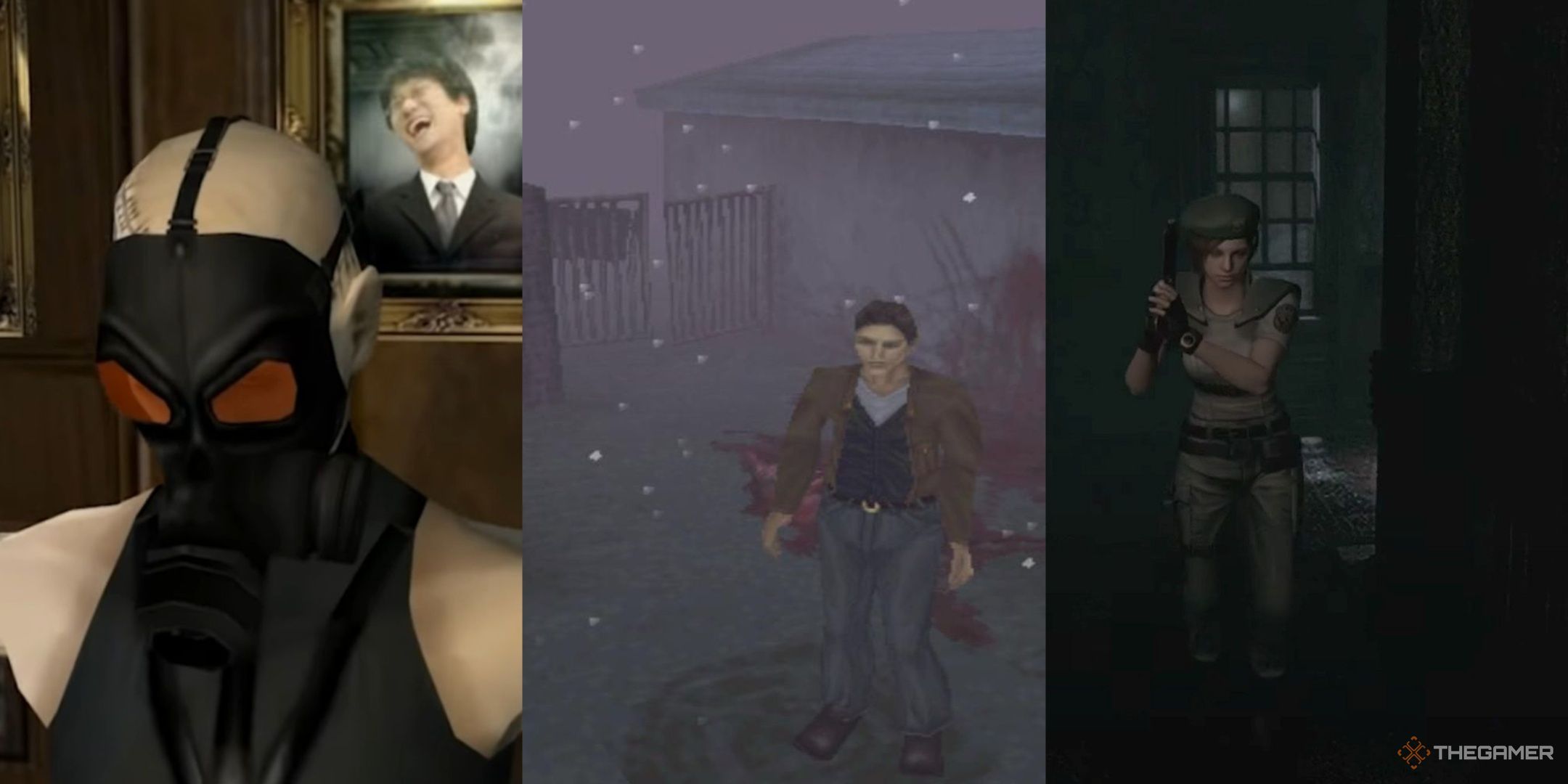
In the original MGS, there is a Pyscho Mantis boss who can read all your inputs. So how are you going to beat him? You need to physically change the port your controller is plugged into. The Master Collection does a commendable job of trying to recreate the moment, but there's just no way to fully replicate it with a wireless controller.
6
Fog to mask small worlds
When gaming was young, every new game felt like a giant leap. 2D became 3D, sharp polygonal surfaces were suddenly animated, and so on. But with these massive leaps came other areas of the game that needed to be hidden to mask the flaws. Something like GTA: San Andreas probably seemed massive at the time, but remove the fog and you can see the entire map from virtually anywhere.
The GTA trilogy is a great example of this, with the ports clearing away the fog and showing just how small the world is.
Silent Hill is another great example of this. While the fog that surrounds the city is well-remembered for the atmosphere, it was used entirely to cover up the fact that the city was only being dumped in small pieces before you. However, consoles are now too powerful and the worlds are expected to be massive. The fog just wouldn't serve the same purpose if the world is already that massive.
5
Duplication of characters for considerations

Reflections are one of the big debates in gaming, from ray-traced reflections to the more common and less graphically demanding subspace reflections. With modern ray tracing, although still expensive, reflections can be made to look more natural and realistic.

Related
10 Nostalgic Games That Would Look Better With Ray-Tracing
Some older games would look very interesting with our current RTX technology.
Older games did not have this luxury and found a rather ingenious solution – to simply duplicate everything. Nothing is a better reflection than the exact same thing. Given how detailed many character models are now, duplicating them en masse would mean a noticeable performance drop. It's a big part of why you don't see working mirrors in many games, new or old.
Today, everything is displayed in pixel perfection. This form has been around on computers for decades, but didn't become common on TVs until around 2010 with HD screens. Until then, CRTs dominated the domestic market with a distinctive look and a refreshing effect that had to be reckoned with when creating games.
This has led to a rather unfortunate problem these days. Ports of older games look rough and pixelated, which is nostalgic for many, so you'd think they looked better. But they literally did it on a CRT screen. The effect of these screens caused the pixels to blend together to create a smoother image. The PS1 Final Fantasy games show exactly what happens to these pre-rendered backgrounds when they're upscaled to a high-resolution, pixel-perfect screen.
3
Pre-rendered backgrounds that look 3D

When games first started transitioning to 3D, it was difficult to create full 3D environments. The cameras had to be changed to fit them, as did the movement. And in many ways they were less detailed overall. The solution to this? Pre-rendered backgrounds. They were already incredible artists and they didn't have to give it up to make new 3D games.

Related
10 best games with pre-rendered backgrounds
Pre-rendered backgrounds in games can create beautiful environments that cannot be replicated in triple-A titles.
The original Resident Evil and especially its Gamecube remake are stellar examples of how amazing pre-rendered backgrounds can fit into a scene. And while it's not exactly impossible to create now, this impression of depth on a pre-rendered background is much more difficult on modern systems.
2
Proprietary technology that just pops
Games made today are mostly designed to be built on as many systems as possible. As such, they use technologies and systems that work everywhere, rather than proprietary ones. This is a good thing overall, allowing more people to experience more games, even if it sometimes results in a game that can't reach its full potential.
This is most clearly seen in games that are ported to modern consoles. Some, like the Prince of Persia trilogy, miss out on a lot of smaller details like lighting, sound, and graphic effects. Others, like Final Fantasy 8 Remastered, lose the ability to run at separate frame rates for different elements at the same time. This is probably the main reason why it's already so hard to emulate Metal Gear Solid 4 and make it a modern port.
1
Save file detection

It is by no means impossible these days, but the function and intent of the system is quite different. For many early games, especially around the creation of memory cards, many games implemented the ability to detect save data from other games and import it, giving you unique cutscenes and carrying over choices and such.
However, it takes a damn long time to make games now. Dragon Age is a great example because two support direct import of save files and then Inquisition has to rely on an online service and then Veilguard has to give it up entirely. It's hard to import a save file when the distance between games is so damn long and different systems can save data completely differently.

Other
8 Best Old School RPGs
From Chrono Trigger to Earthbound, we've rounded up the best old-school RPGs of all time.
