Tactical shooters hold a different kind of respect in gaming. They are big on discipline, awareness, and careful decision-making. It’s hard to succeed with speed alone. It’s all about reading the situation, understanding the environment, and acting with purpose. This makes it feel grounded and believable. The greatest entries in this genre leave a lasting mark because they shape how players think of the genre.

8 Best Offline PC Tactical Shooter Games To Play Right Now
While multiplayer tactical shooters provide a unique shot of adrenaline, for players who enjoy solo play, these shooters have extensive offline modes.
Every title on this list is a milestone for strategy. These tactical shooters introduced features like planning maps, destructible walls, gadgets, and specialized team roles. These games are much more than old hits from the past. They are the actual foundation for every modern military simulation.
What’s That Weapon?
Identify the silhouettes before time runs out.
Identify the silhouettes before time runs out.
Easy (7.5s)Medium (5.0s)Hard (2.5s)Permadeath (2.5s)
10
Star Wars: Republic Commando
Proved Sci-Fi Squads Could Be Truly Tactical
- A simple command system makes teamwork smooth and effective.
- Strong squad identity adds immersion and connection.
Star Wars: Republic Commando somehow successfully blended the Star Wars universe with a gritty, squad-based shooter. The squad system is simple, but effective. Players can issue commands quickly, directing teammates to take positions, breach doors, or focus fire. It keeps the action flowing while still allowing tactical decisions.
Star Wars: Republic Commando is faster than traditional tactical shooters but still requires awareness and positioning. Charging forward without thinking can still lead to failure. It shows that tactical shooters do not always need strict realism to be great. With the right design, they can deliver depth, tension, and teamwork in a completely different setting while still feeling authentic.
9
Ready or Not
Captured the Psychological Pressure of Modern SWAT
- The game forced players to distinguish between frightened civilians and armed suspects in dark, chaotic spaces.
- Detailed weapon handling and armor penetration mechanics made every firefight feel heavy and dangerous.
Ready or Not basically takes ideas from the SWAT series and pushes them further with improved systems and realism. Unlike military shooters, the goal here is to arrest suspects rather than kill them. Players have to shout for compliance, use non-lethal tools like beanbag shotguns, and only use deadly force if a suspect points a weapon at them or a civilian.
The level of detail in environments is what makes Ready or Not so great. Each location feels believable, filled with objects and layouts that affect movement and visibility. It encourages careful exploration instead of rushing. It stays true to the genre while improving on its foundations.
The Console Classic That Proved Tactical Teamplay Could Thrive Online
- Voice communication and teamwork shape every match.
- Slower pacing rewards coordination over rushing.
While many shooters were big on fast action, SOCOM 2: U.S. Navy SEALs leaned into teamwork, communication, and careful movement. The voice command system was one of its standout features. Players could give orders using a headset, creating a strong connection between player and squad. It made commanding teammates feel direct and immersive.
SOCOM 2: U.S. Navy SEALs also had multiplayer with matches that required coordination instead of chaos. Teams that communicated and planned had a clear advantage. Rushing in alone rarely worked, which pushed players to think and act as a unit. SOCOM 2: U.S. Navy SEALs is slower than most shooters of its time, but that slower pace builds tension. Every encounter feels important. There is time to think, adjust, and react carefully.
7
ARMA 3
The Ultimate Military Sandbox That Pushes Realism And Player Freedom
- Extensive ballistics systems and realistic stamina forced players to account for every gear they carried.
- Huge maps support infantry, vehicles, and air combat.
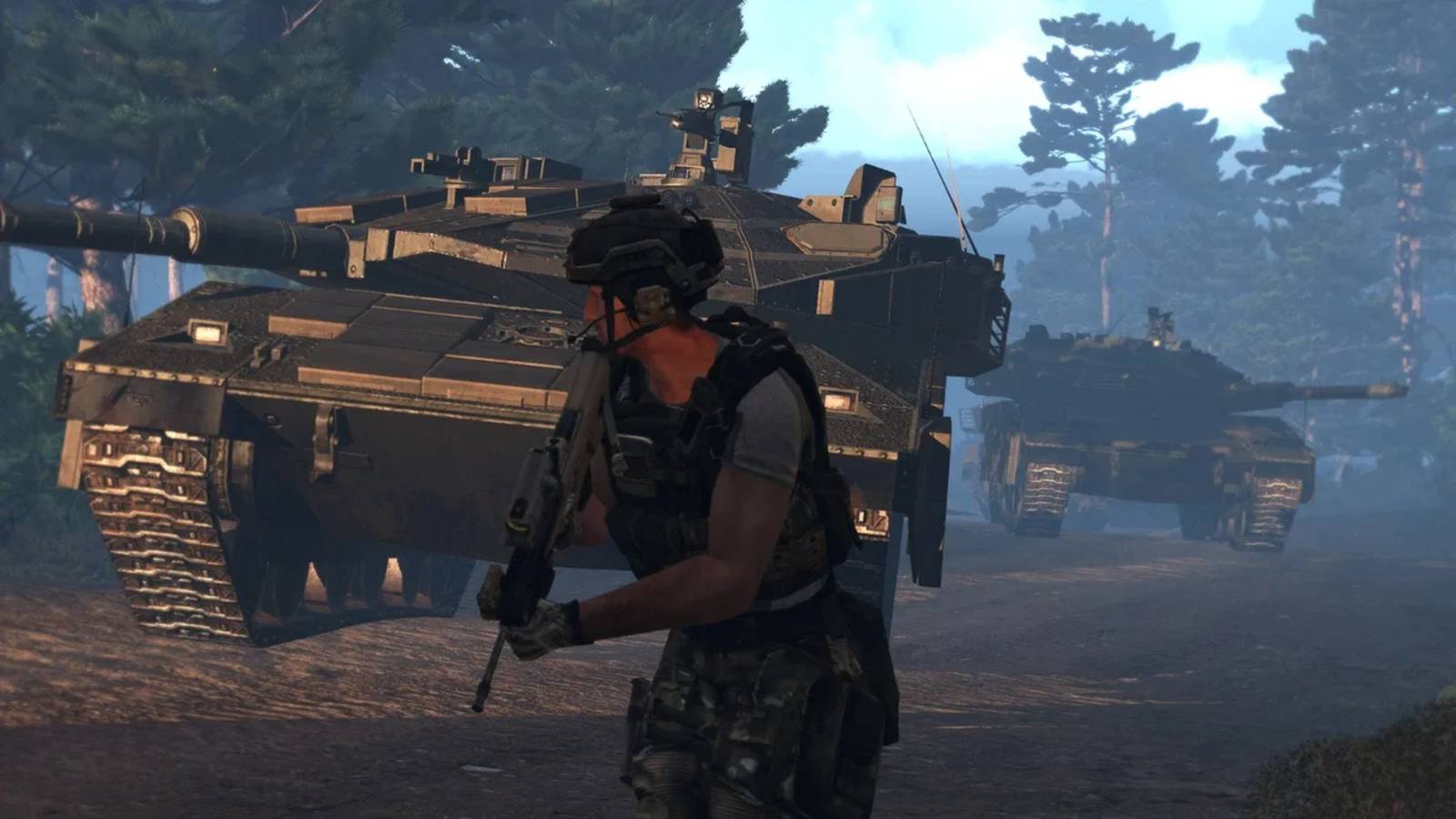
ARMA 3 is probably the ultimate military multiplayer sandbox. The scale alone sets it apart from other military sims. It has massive maps that allow operations that feel like real military missions. Players can move on foot, drive armored vehicles, fly helicopters, or coordinate across long distances. It creates a sense of space that most shooters cannot match.
Realism drives every system in ARMA 3. It features a complex ballistics system where bullets are affected by gravity, wind, and the material they hit. Players must manage their stamina, as carrying too much gear makes it harder to aim and move. The medical system is also detailed, requiring specific items to treat different types of injuries.
6
Tom Clancy’s Rainbow Six Siege
Fast-Paced Tactical Shooter with Destructible Environments
- Destructible environments allowed players to blow holes through floors and ceilings to surprise their enemies.
- The focus on drones and cameras turned every match into a high-tech game of hide-and-seek.
Tom Clancy’s Rainbow Six Siege is still all about planning, teamwork, and precision, but everything happens faster and with more pressure. The destructible environment is the first thing that changes how the game is played. Walls, floors, and ceilings are not just background objects. They are tools. A safe room can turn into a death trap in seconds. A defensive setup can fall apart with one well-placed breach. This forces players to think in three dimensions, not just left and right, but above and below as well.
Operators add another layer to Tom Clancy’s Rainbow Six Siege without breaking the tactical feel. Each one brings a specific role: breaching, intel gathering, defense, or disruption. And the only way to succeed is how well those roles work together. A strong team does not just pick good operators; it uses them in sync.
5
Tom Clancy’s Ghost Recon
Almost Like a Teal U.S. Army Land Warrior Program
- The shift to outdoor environments prioritized the use of ghillie suits, snipers, and flanking maneuvers.
- Persistent squad stats meant that keeping soldiers alive across missions was vital for long-term success.
Ghost Recon took the ideas from Rainbow Six and moved them into open environments. So rather than having tight indoor missions, it placed squads in wide outdoor areas where visibility, terrain, and distance became critical. This shift changes how tactics work. Cover is not always close. Enemies can engage from far away, and movement must be careful and deliberate. Rushing forward often leads to failure. That slower pace builds tension in a different way.

15 Tactical Shooters To Play If You Loved Ghost Recon: Breakpoint
Ghost Recon Breakpoint may have launched to mixed reviews, but there are other great games in the genre to enjoy.
Players can split teams, position units, and coordinate attacks from different angles. Watching a plan come together successfully feels rewarding because it comes from smart decisions, not luck. The game also respects the player’s intelligence. It does not rely on heavy guidance or constant instructions. Success comes from reading the environment, understanding enemy behavior, and adapting to changing situations.
4
Operation Flashpoint: Cold War Crisis
Massive Military Sandbox
- Massive battlefields with realistic military structure.
- Lethality and distance make every encounter dangerous.
Operation Flashpoint changed how scale works in tactical shooters. Instead of tight corridors or small maps, it opened up entire islands. Battles stretched across forests, towns, and hills, creating a sense of war that felt far bigger than anything at the time. The best thing about the game is probably its commitment to realism. Players will notice that weapons behave like real weapons. Vehicles handle with weight and limitations. And enemies are dangerous at all ranges. There is no safe distance. A single mistake can end a mission instantly.
Operation Flashpoint: Cold War Crisis’s influence is clear in later military sims, especially the Arma series. But even today, the original still stands out because of how bold it was. It aimed for something bigger and more realistic than its peers, and delivered.
3
SWAT 4
Mandated Tactical Restraint and Professional Procedure
- Focus on procedure, arrests, and rules of engagement.
- Unpredictable AI creates constant tension in every mission.
When it comes to tactical shooters that try to simulate law enforcement operations, it’s hard to find a better one than SWAT 4. It’s big on non-lethal tactics and the preservation of life. Using excessive force is punished. Shooting too quickly or ignoring procedure can fail a mission. That forces players to think like real officers, not action heroes.

7 Best Tactical Shooter Games For Beginners
Tactical Shooters can be challenging for newcomers to get into. For those looking for a beginner-friendly experience, here are some great options.
One of the most interesting things about SWAT 4 is that suspects can behave unpredictably. Some comply immediately, while others hesitate or fake surrender. Civilians can panic and run into danger. These small details create situations that feel unscripted. Even after all these years, SWAT 4 is still one of the best SWAT games with an unmatched level of detail in law enforcement tactics.
2
Counter-Strike
Set the Standard for Competitive Tactical Shooters
- One of the most influential tactical shooters.
- Map control and positioning decide outcomes more than raw aim.
Few games have shaped multiplayer shooters like Counter-Strike. It looks simple at first glance: terrorists versus counter-terrorists, plant or defuse the bomb, but underneath that simplicity sits one of the deepest tactical systems ever made. The economy system adds another layer that many games still struggle to match.
Winning rounds earns money, which allows for better weapons. Losing forces tough choices. Should the team save money for the next round or take a risk now? Those are the kind of decisions players have to make. Although Counter-Strike started as a mod for Half-Life, its influence is massive. Competitive shooters, esports, and even modern tactical games borrow ideas from it.
1
Tom Clancy’s Rainbow Six
Launched the Era of Realistic Planning
- Introduced mission planning, squad control, and lethal realism.
- Forces careful thinking where one mistake can end everything.
This is where tactical shooters found their identity. Before Tom Clancy’s Rainbow Six, most shooters were about speed and reflexes. This one slowed everything down and demanded careful thinking before a single shot was fired. The planning phase alone changed everything. Players studied blueprints, placed squad members, set entry points, and timed movements. It felt closer to commanding a real operation than playing a game.
Another reason Tom Clancy’s Rainbow Six occupies this spot is its influence. Almost every tactical shooter that came after borrowed something from it, planning systems, realistic damage, slow pacing, or squad-based gameplay. It didn’t just succeed; it set the standard. Even today, the design still holds up because it focuses on fundamentals. There are no unnecessary features, just pure tactical decision-making.

5 Best Tactical Shooters on PlayStation 5
Tactical shooters introduce placement and cover as important factors in
achieving victory, and PS5 has some of the best-looking ones around.
